
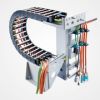



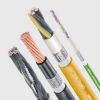


Cable routing is crucial for moving machines and automated systems. Two commonly used solutions are Cable carriers (energy chains) and suspended cable bundles (loose cables hanging in loops). But when should you choose one over the other?
In this blog, we compare both systems based on five key criteria: motion control, wear and tear, space utilization, costs, and maintenance.
⚙️ 1. Motion control and positioning
- cable carrier:
Provides controlled, repeatable movement of cables and hoses. The cables are guided in a fixed path, preventing them from becoming tangled or rubbing. - Hanging cable package:
The cables hang loosely in a loop and move freely. This may be sufficient for simple or slow movements, but less predictable for fast or complex trajectories.
✅ Advantage: cable carrier
🛡️ 2. Protection and wear
- cable carrier:
Protects cables against wear, vibration, impact, and external influences. Ideal for industrial environments or applications with high cycle counts. - Suspension cable package:
Cables are unprotected and can rub against structural components or each other, leading to faster wear or malfunctions.
✅ Advantage: cable carrier
📦 3. Use of space
- cable carrier:
Has a fixed length and bending radius, which may require more space, especially for long strokes. - Suspension cable package:
Takes up less space when stationary. Suitable for simple linear movements with limited movement distance.
✅ Advantage: Hanging cable package (for limited space and simple movements)
💰 4. Costs (initial and total)
- cable carrier:
Higher initial investment due to components and assembly. But lower maintenance costs and longer cable life. - Suspension cable package:
Cheaper to purchase and easier to install. However, it can be more expensive in the long term due to higher failure rates and cable replacement.
✅ Advantage: cable carrier long term), suspension cable (for low loads and budgets)
🛠️ 5. Maintenance and reliability
- cable carrier:
Less chance of cable breakage, predictable behavior. Easy to inspect and replace per segment. - Suspension cable package:
Greater risk of invisible damage (e.g., internal cable breakage). More difficult to monitor without visual wear and tear.
✅ Advantage: cable carrier
📊 Summary: which solution is right for you?
| Characteristic | cable carrier | Suspension cable package |
|---|---|---|
| Motion control | ⭐⭐⭐⭐⭐ | ⭐⭐ |
| Protection | ⭐⭐⭐⭐⭐ | ⭐ |
| Space efficiency | ⭐⭐ | ⭐⭐⭐⭐ |
| Purchase costs | ⭐⭐ | ⭐⭐⭐⭐ |
| Maintenance | ⭐⭐⭐⭐ | ⭐⭐ |
✅ Conclusion
For applications involving a lot of movement, risk of wear, or high reliability requirements, a cable carrier is almost always the better choice. For low loads, limited budgets, and simple linear movements, a hanging cable package may suffice.
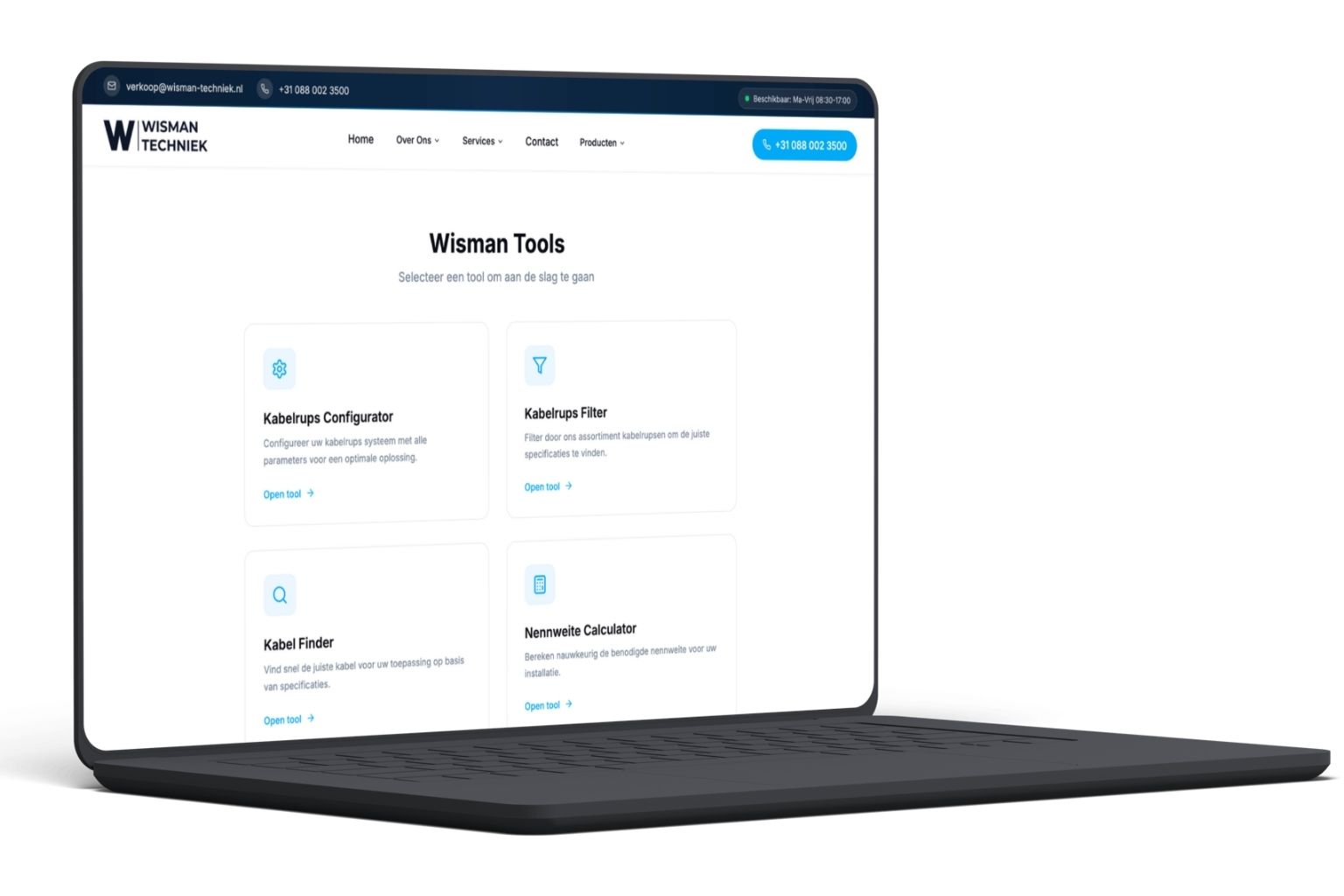
🎯 Not sure which cable carrier is right cable carrier your application?
👉 Start the cable carrier and find the right solution right away.