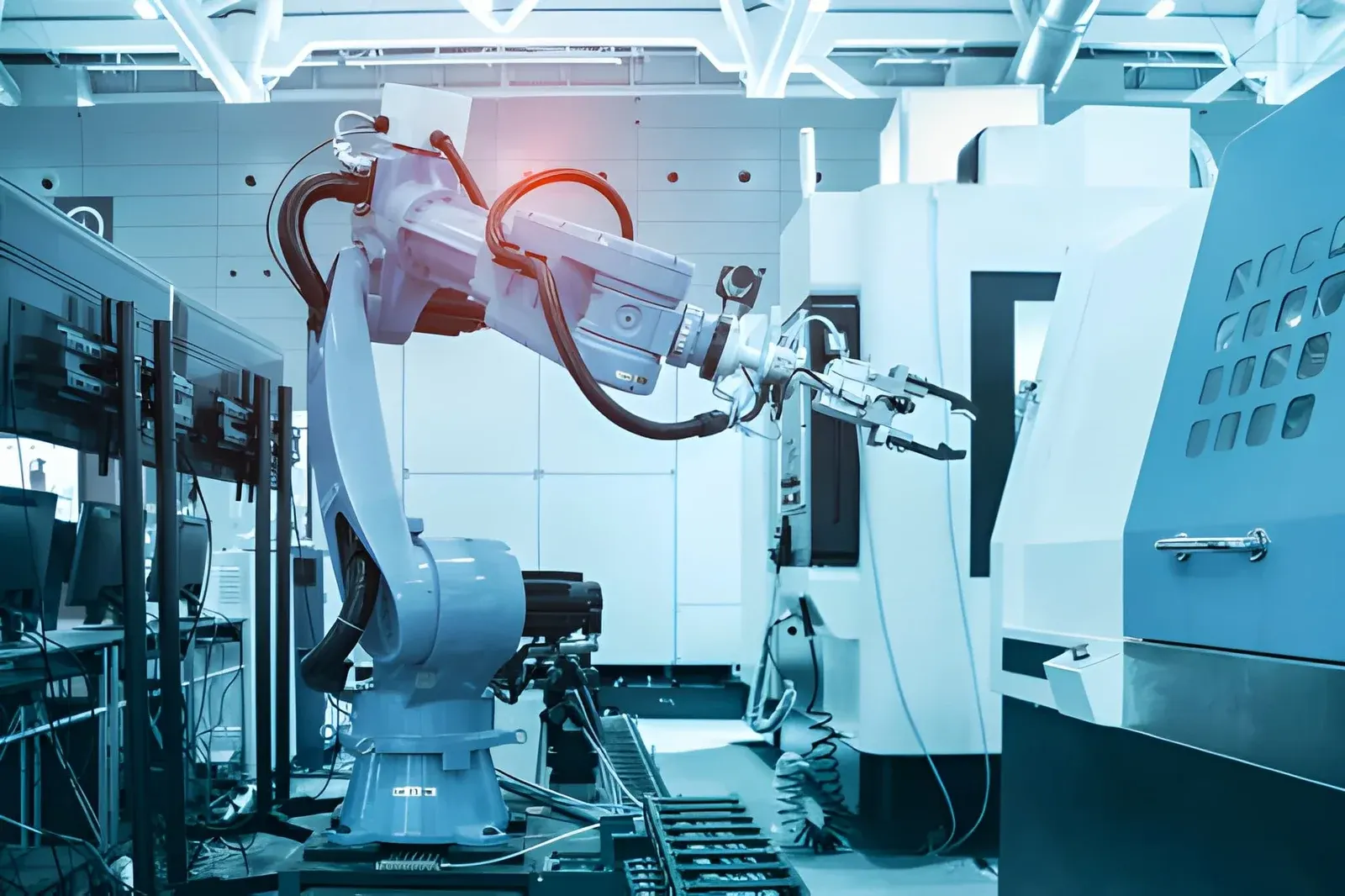
KUKA has released iiQKA.AI Vision, software for 2D and 3D image processing that runs directly in the robot controller. The robot manufacturer reports this in a press release of 8 October. The software is intended for bin picking, assembly, quality control and depalletising, and is also aimed at integrators and users with little experience of vision. From 20 to 22 October KUKA showed the software at NVIDIA GTC in Berlin.
What KUKA reports
According to the press release, the software recognises parts in 2D and 3D, determines their position and calculates where the gripper must grip. This data goes directly to the robot. The image processing takes place on the KUKA AI Extension Platform, a computing unit in the controller based on the NVIDIA Jetson Orin module. No cloud connection, external PC or extra infrastructure is needed.
You set up an application via iiQWorks, with drag and drop, pre-made templates and a guided workflow through to commissioning. KUKA supplies cameras and matching components itself. The software can be ordered via the KUKA webshop. The press release does not mention figures for cycle time or accuracy.
Lower threshold for vision, more robots that search and grasp
Until now, vision on a robot was often a separate project: an extra PC, separate software and a specialist to connect everything. If that becomes simpler, applications such as bin picking and picking up parts in varying positions come within reach of more companies. Smaller machine builders and suppliers too.
Such a robot works differently from a robot that follows the same path over and over. It reaches into a bin, tilts the wrist to the position of the part and chooses a slightly different route for each grasp. The movements around the wrist, on axes 4 to 6, therefore become more varied. Precisely there the dress pack, the package of cables and hoses along the arm, is bent and twisted at the same time. What a dress pack is exactly is explained in what is a dress pack.
What does this mean for your robot and the dress pack?
A vision application stands or falls with reliability. A robot that sees well but is idle because of a cable failure at the wrist achieves nothing. Three points to consider in advance:
- If a camera hangs on the arm, an extra cable runs with it. Where the camera goes is decided per application. If it is on the arm or near the gripper, the cable from that camera has to go through the dress pack, alongside the lines for the gripper, such as compressed air or vacuum. Choose a cable made for robot movements and include it in the build-up of the package. See flexible cables or find one with the Cable finder.
- Allow for more wrist movement. When picking from a bin, the wrist rotates more often and further than on a fixed path. A retraction system keeps the package taut, so that no whipping loop forms that hits the bin or the robot. Read in preventing cable failure on your robot why cables on axes 4 to 6 break and how to prevent it.
- If you convert an existing robot, look at the package again. A different gripper, an added camera or a new task changes the load. With the Dress pack configurator you choose brand, model and solution and get a parts list that suits your robot. KUKA robots are included.
What Wisman Techniek does
Wisman Techniek supplies dress packs from Reiku: protective hoses, holders, ball joints, retraction systems and heat protection, for robots of many brands. We put the package together based on your robot, the lines that have to go in and the movements it makes. Not sure whether an existing package still fits a new application? Send us the robot and the lines. We will look at it free of charge.
Calculate it yourselfDress pack configuratorConfigure a dress pack for your robotOpen the dress pack configurator