Short answer
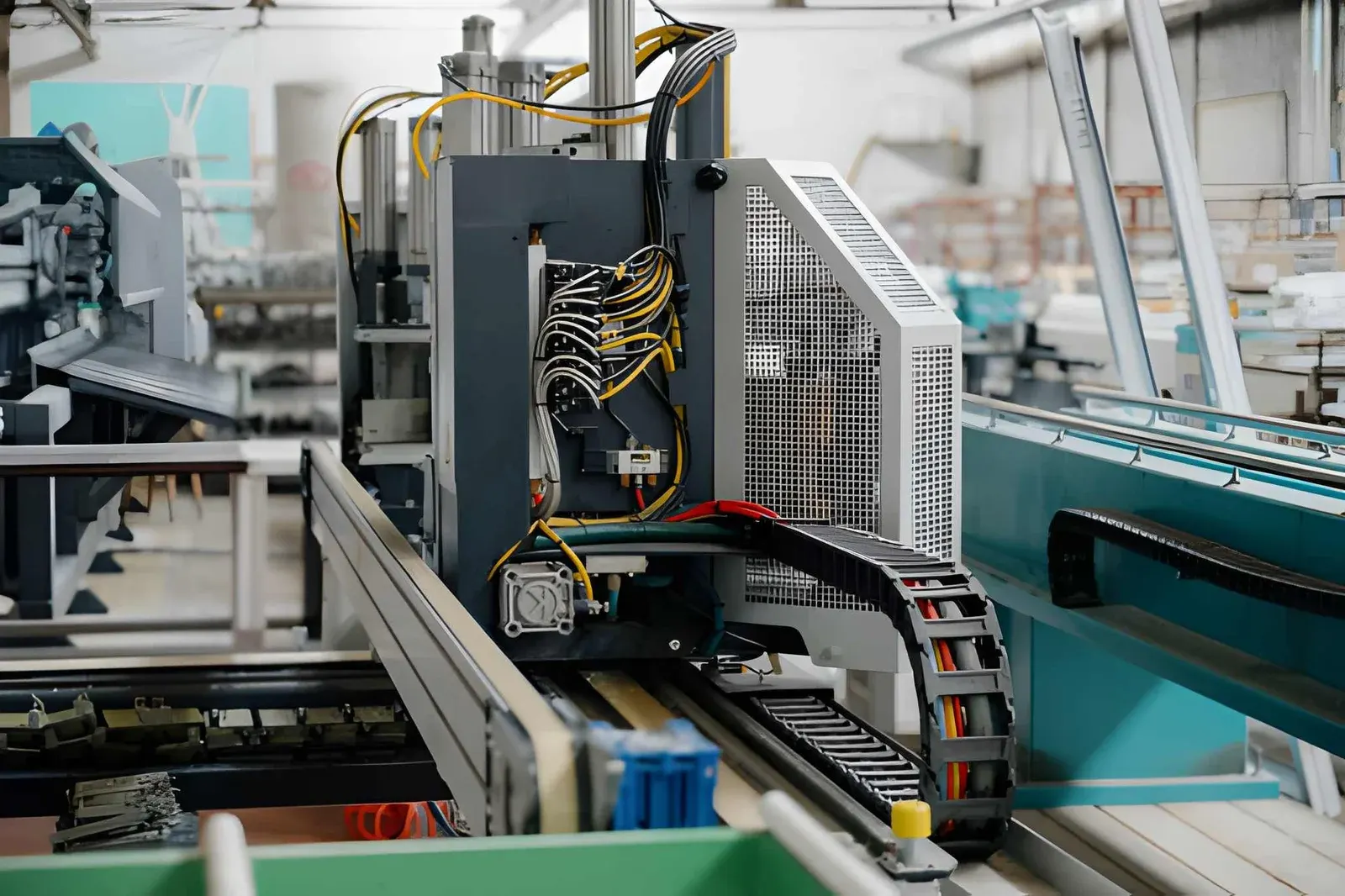
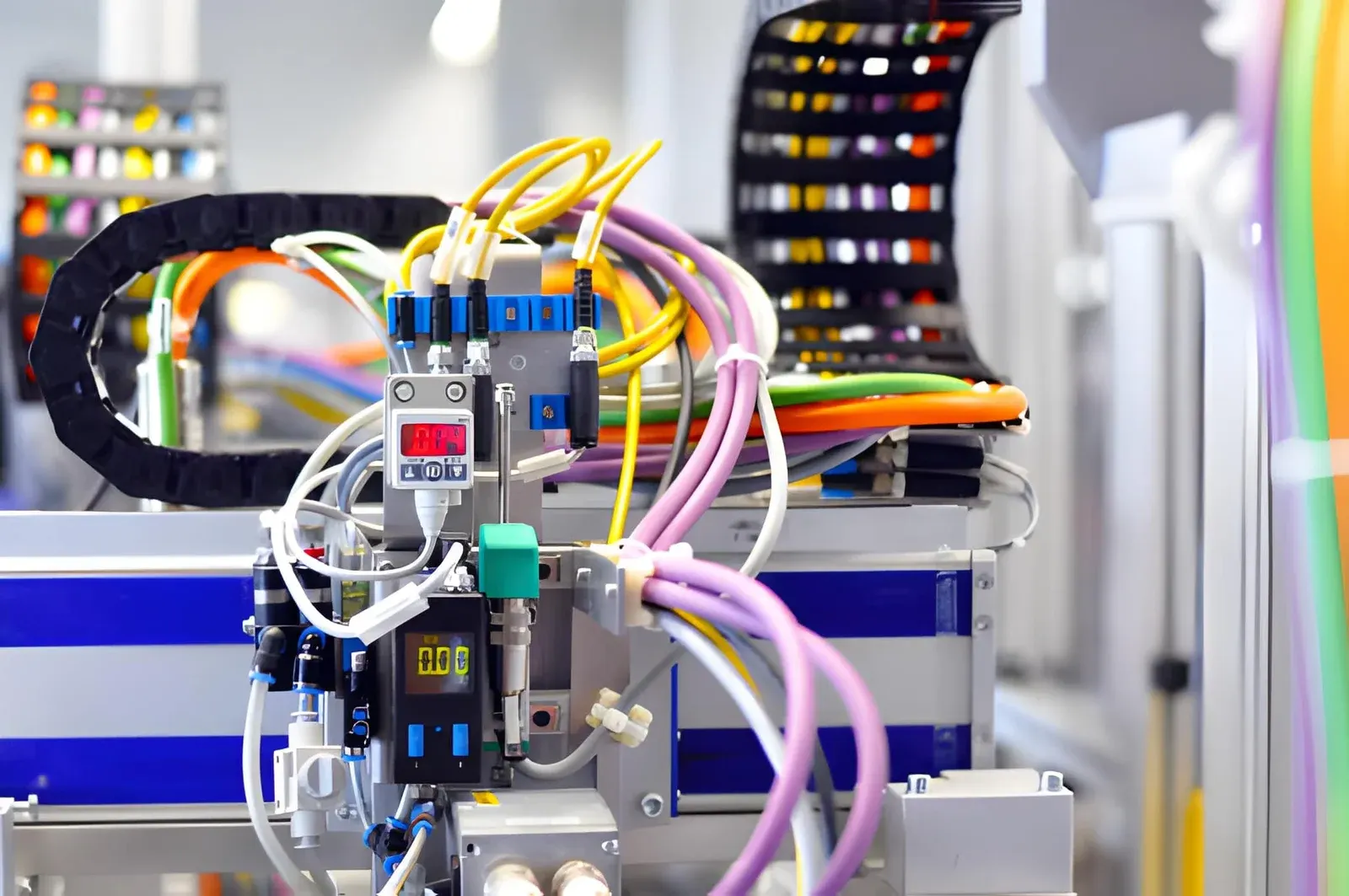
A cable carrier guides cables and hoses in an enclosed chain with a fixed bending radius and moves along with the motion. A festoon hangs the cables in loops from trolleys on a rail. A cable carrier takes up less space, protects the cables better and also works at high speeds and in any direction. A festoon is mainly chosen for long, straight travel lengths where there is room above the machine.
There are two common ways to bring cables and hoses to a moving part of a machine: a cable carrier or a hanging cable system, also called a festoon or loop cable system. With a festoon, the cables hang in loops from trolleys that roll along a rail. With a cable carrier, they lie in a chain that folds around a fixed radius. Both work, but they suit different situations.
How does a festoon work?
A festoon consists of a rail with a number of trolleys. The cables hang from each trolley, often flat cables. When the machine moves, the trolleys slide apart or towards each other and the cables hang in loops between the trolleys. You often see this system on overhead cranes and long conveyor systems.
How does a cable carrier work?
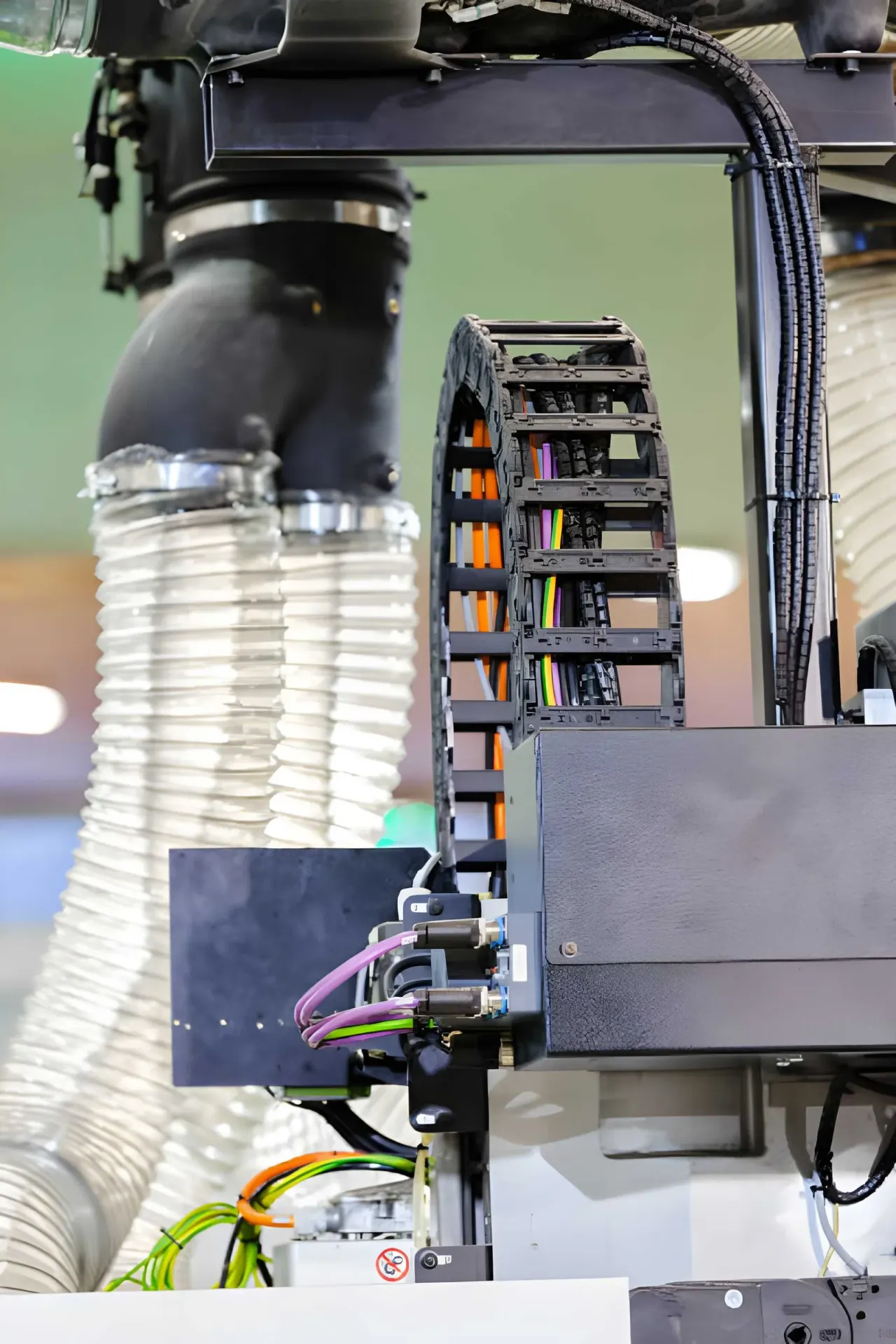
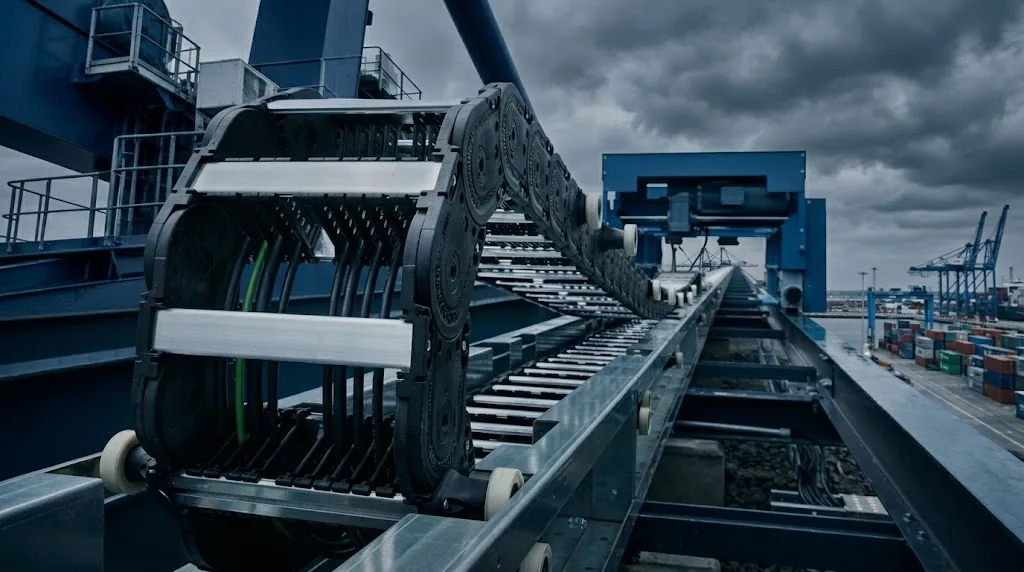
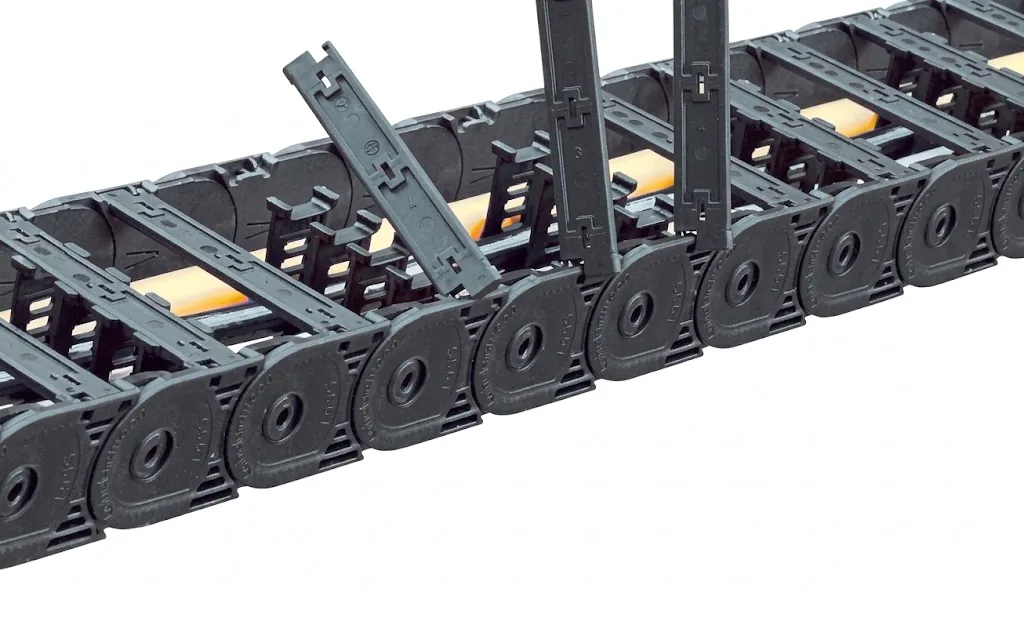
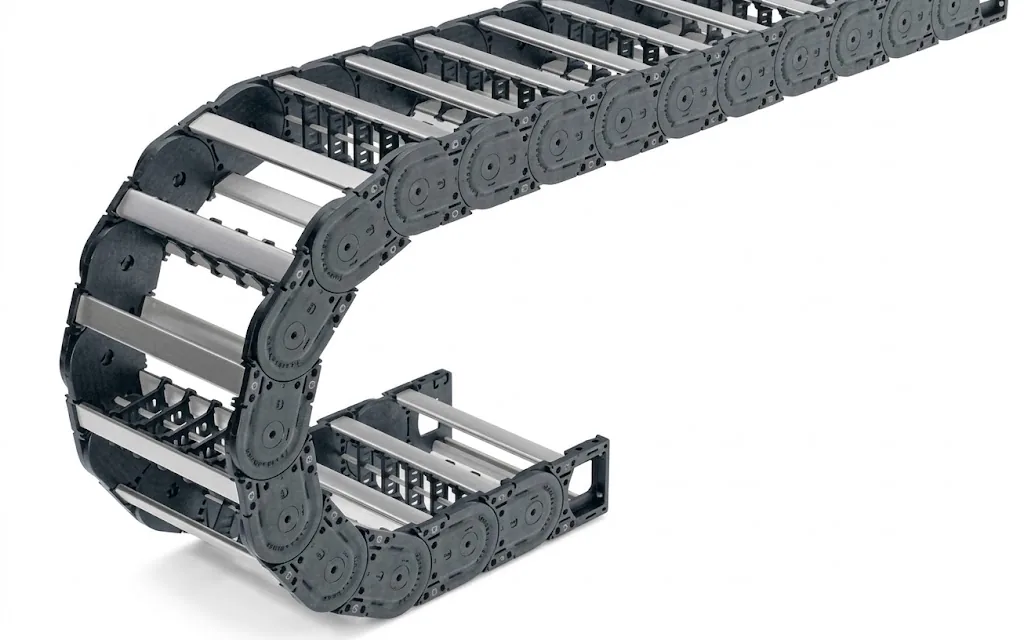
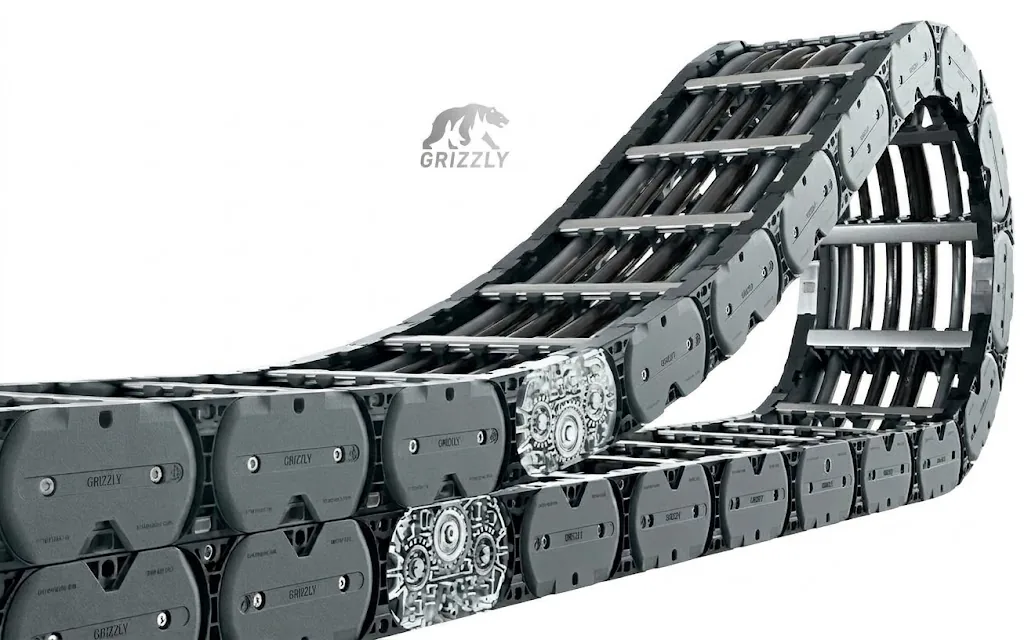
A cable carrier is a chain of links in which the cables and hoses lie, with dividers between them. The chain bends around a fixed bending radius, so the cables never kink too sharply. One end is attached to the fixed point, the other to the driver. With a short stroke the carrier supports itself (self-supporting), with a long stroke the upper section slides over the lower one in a guide channel. Read more in what is a cable carrier.
The differences at a glance
| Cable carrier | Festoon | |
|---|---|---|
| Space | Compact, runs alongside or beneath the machine | Needs space above the travel length for the rail and loops |
| Protection | Cables are shielded, including enclosed versions | Cables hang freely |
| Direction of movement | Horizontal, vertical, hanging, standing, also on a robot | Mainly horizontal along a straight rail |
| Cables and hoses | Round cables, hoses and hydraulics side by side, separated by dividers | Often flat cables |
| Long travel length | Gliding up to hundreds of metres, the TKHP up to 1500 m | Suitable for long, straight tracks |
| Bending radius | Fixed, determined by the carrier | Depends on the shape of the loop |
When do you choose a cable carrier?
- There is little space above the machine. A carrier runs alongside or beneath the moving parts.
- The cables must be protected from swarf, dirt or mechanical damage. Then choose an enclosed version, see open or enclosed.
- You combine cables, hoses and hydraulics in one guide.
- The movement is not horizontal, or the machine moves fast and often.
When do you choose a festoon?
On a long, straight track with space above it, such as an overhead crane in a hall, a festoon is often used. Even there, a gliding cable carrier can be an alternative, especially if the cables need protection or headroom is limited. For long travel lengths, read more in a cable carrier for a long travel length.
Switching from a festoon to a cable carrier
Do you want to replace a festoon with a cable carrier? Start with the cables: which cables and hoses go through it, and what is their diameter. Then determine the travel length and the arrangement. Enter that in the Cable carrier configurator and you will see which carriers fit. Also check whether the cables are suitable for a cable carrier: flat festoon cables are not always made for it.
Frequently asked questions
What is a festoon?
A festoon, also known as a loop cable system or hanging cable system, is a rail with trolleys from which cables hang in loops. When the machine moves, the trolleys move with it.
Is a cable carrier better than a festoon?
That depends on the situation. A cable carrier is more compact, protects the cables better and works in any direction of movement. A festoon is mainly used on long, straight tracks with space above.
Can I put my festoon cables in a cable carrier?
Not always. Cables in a cable carrier must be suitable for constant flexing around the radius of the carrier. Check that with the cable manufacturer or ask us.
Next step
Calculate it yourself or browse the range. We check your result free of charge.
Series on this topic
Question about this topic?
Ask Joep directly
RMO Specialist at Wisman Techniek