Short answer
Strain relief means securing a cable before its connection point, so that pull, weight and vibration act on the fixing and not on the terminals or the connector. In a control cabinet you do this with strain relief modules, cable combs or EMC clamps; in a cable carrier with clamps at both ends.
Strain relief means securing a cable before the point where it is connected. The pull, weight and vibration of the cable then end up on the fixing, and not on the terminal strip, the connector or the solder joint. Without strain relief, the cable effectively hangs from its own connection, and that is not what the connection is made for.
It sounds like a detail, but it is a common cause of faults that are hard to find: a core that is just loose, a connector that loses contact now and then, or a cable that slowly creeps in a cable carrier until it breaks. In this article you read what strain relief does, where you need it and how to do it properly.
What exactly does strain relief do?
A cable is almost always under a little tension. It hangs by its own weight, it is pulled along by a moving machine part or it vibrates with the machine. All those forces have to go somewhere.
Strain relief absorbs those forces at a fixed point, a short distance before the connection. As a result:
- there is no pull on the cores and the terminals
- connections do not vibrate loose
- the cable does not slide back and forth
- the jacket stays intact where it enters the cabinet or the machine
The word says it all: you relieve the connection of strain.
Where do you need strain relief?
There are three places where strain relief often makes the difference:
- (01)In the control cabinet: cables entering from below or above hang with their weight on the terminals if they are not secured.
- (02)At the cable entry: where the cable passes through the cabinet wall, it must not be able to move back and forth. That is why many cable entries already provide strain relief themselves.
- (03)In and at the cable carrier: cables in a moving carrier must be secured at both ends, otherwise they creep a little with every movement.
Below we go through them one by one.
Strain relief in the control cabinet
In the cabinet you secure cables on a rail, a mounting plate or in a module. Common solutions:
- Strain relief modules: cables are placed in the module and secured with cable ties. There are also wireless modules and modules that lock the cable in place.
- Cable combs with bushings: a comb with brass or aluminium bushings gives a firm fixing and keeps the cables neatly side by side per group.
- EMC clamps: for shielded cables. The clamp presses the shield against an earth bar or DIN rail and secures the cable with cable ties at the same time.
The modules and combs in our range are made of PA66 and help meet the strain relief requirements of EN 62444. An overview is available under strain relief.
An added benefit: with strain relief, the cables lie neatly side by side per group. Troubleshooting is faster and adding a cable is easier.
Strain relief and EMC: two functions in one clamp
Shielded cables, such as motor and encoder cables, must have their shield earthed over the full circumference. You do this with an EMC clamp. Most EMC clamps also secure the cable mechanically with one or two cable ties, and therefore provide strain relief at the same time.
Mind the order: secure the cable first, then connect it. Read more about choosing the clamp under EMC clamps, and about shielding in the cable carrier in shielded cable in the cable carrier.
Strain relief at the cable entry
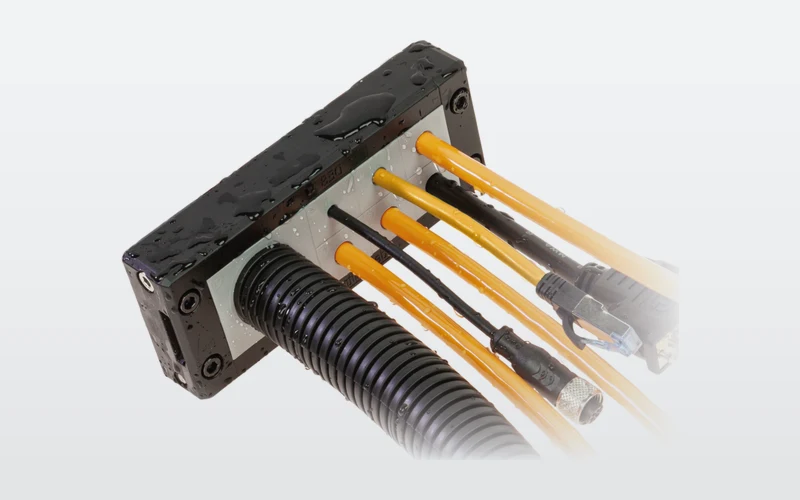
Where a cable passes through the cabinet wall, you want to seal and secure it at that point. Many cable entries combine those two functions:
- Cable entry plates with membranes: the cable is pushed through a membrane; a second membrane provides extra strain relief.
- Split frames: closing the frame clamps the grommets around the cable and so provides strain relief, also for cables with connectors.
Which cable entry suits your cables is explained in choosing a cable entry. In the Cable entry planner you list your cables and see which solution fits.
Calculate it yourselfCable entry plannerFrom cable list to cable entry with article numbersOpen the plannerStrain relief in the cable carrier
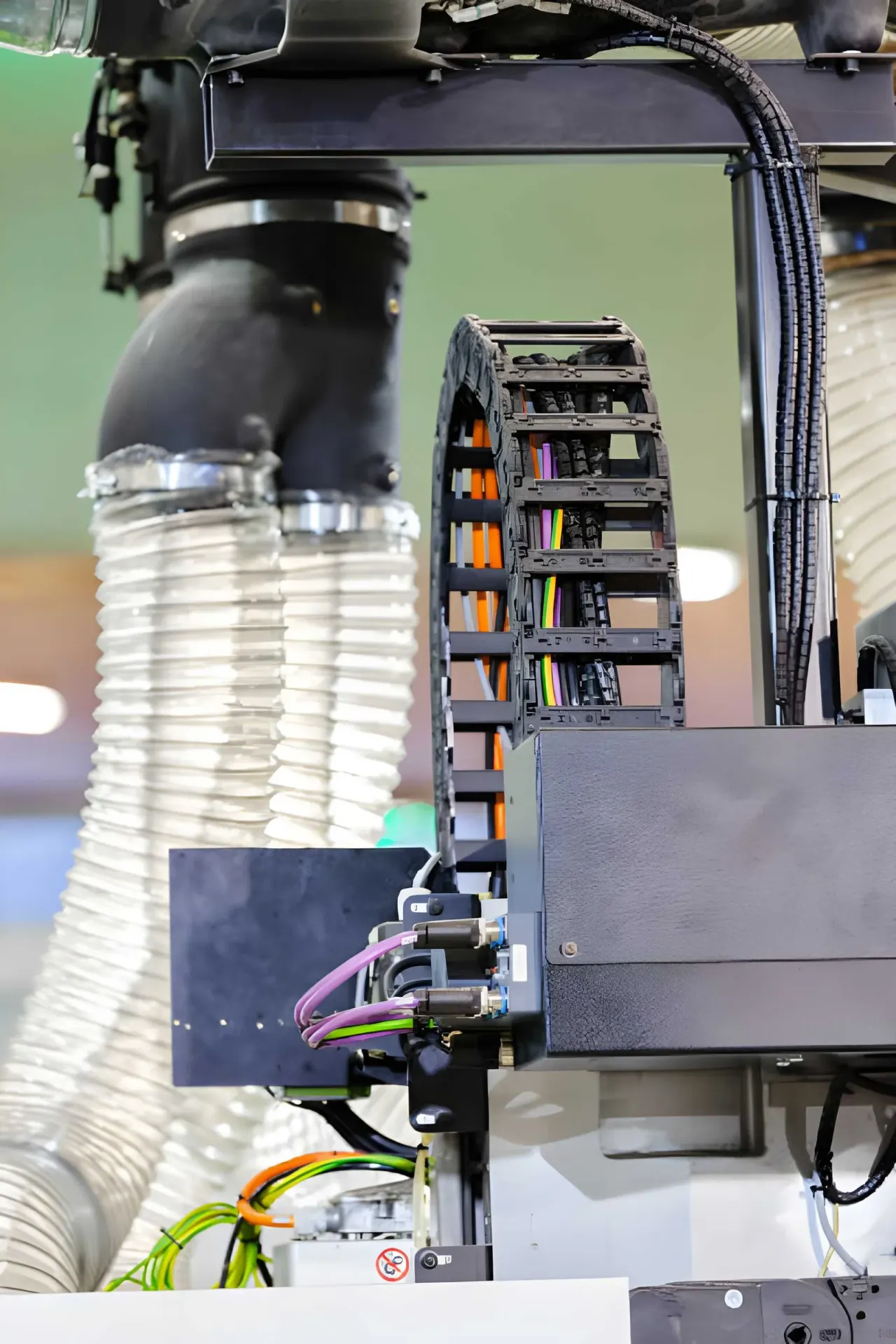
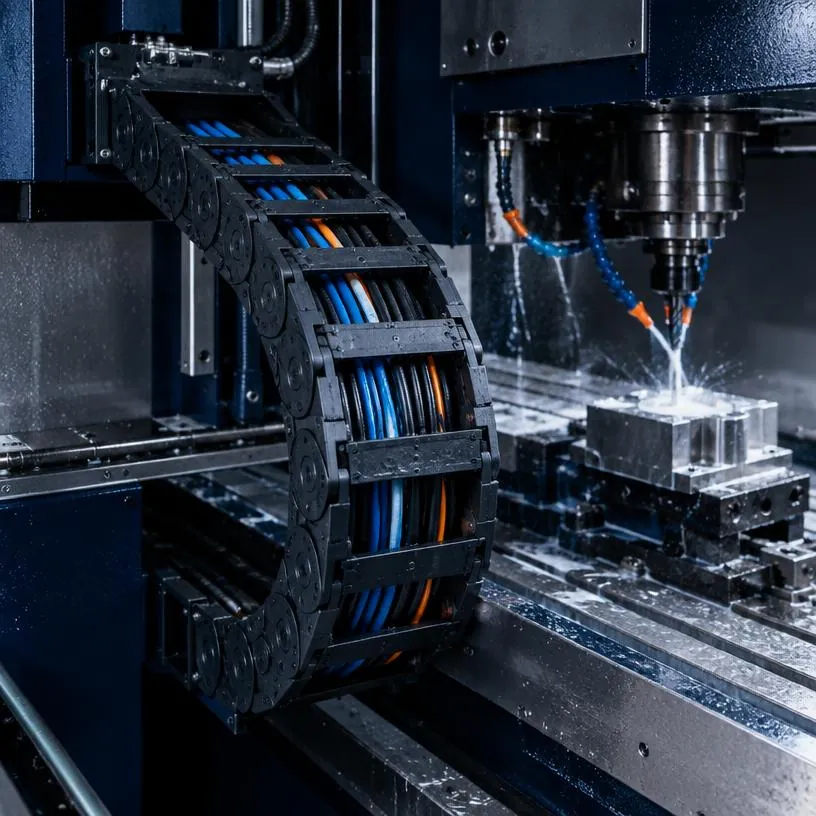
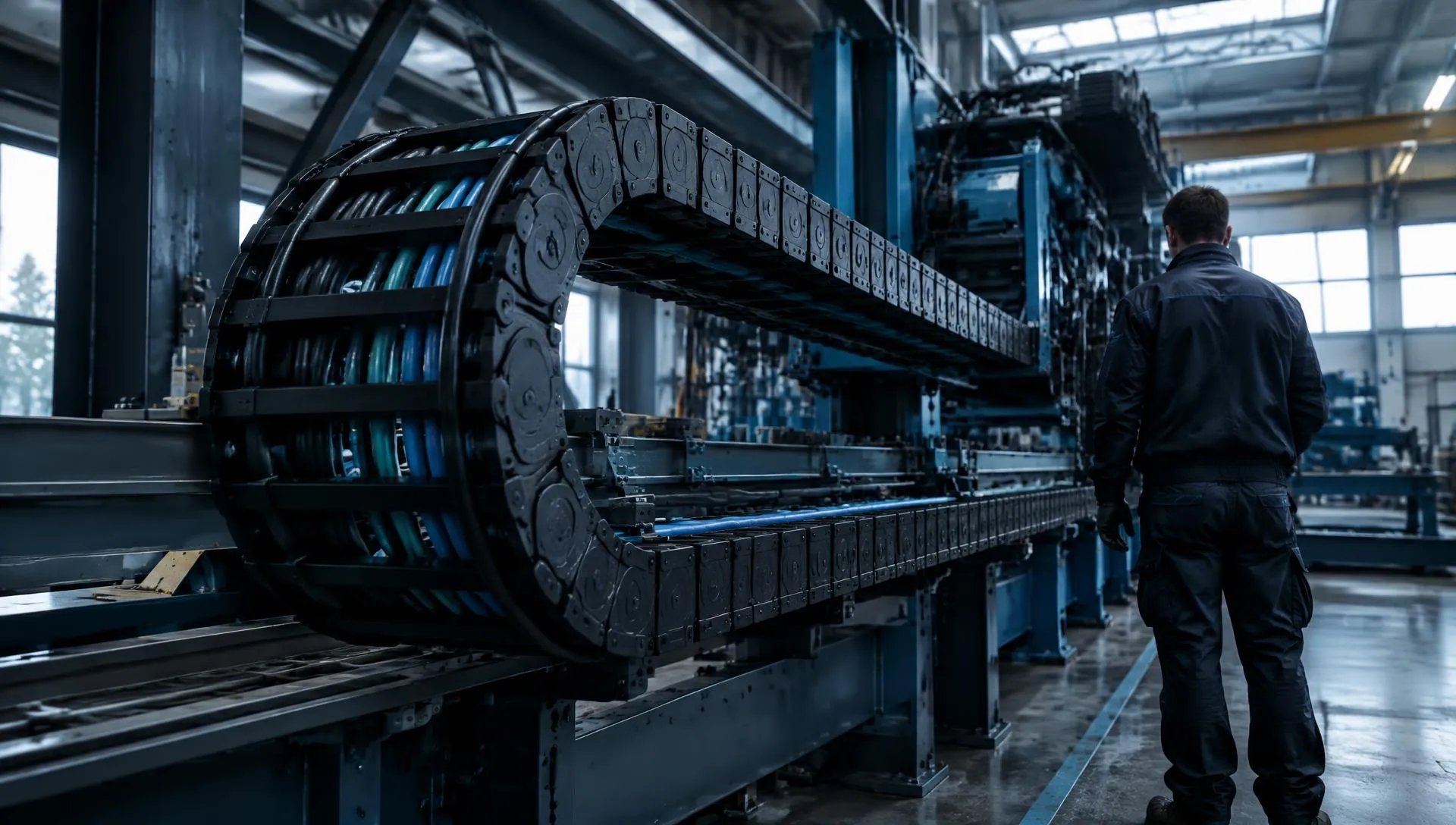
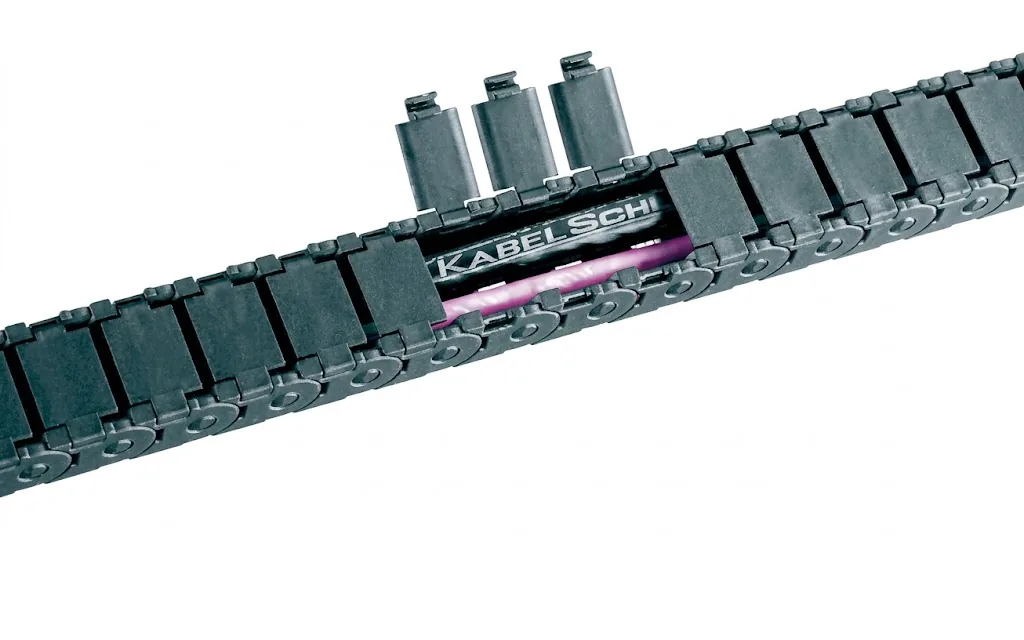
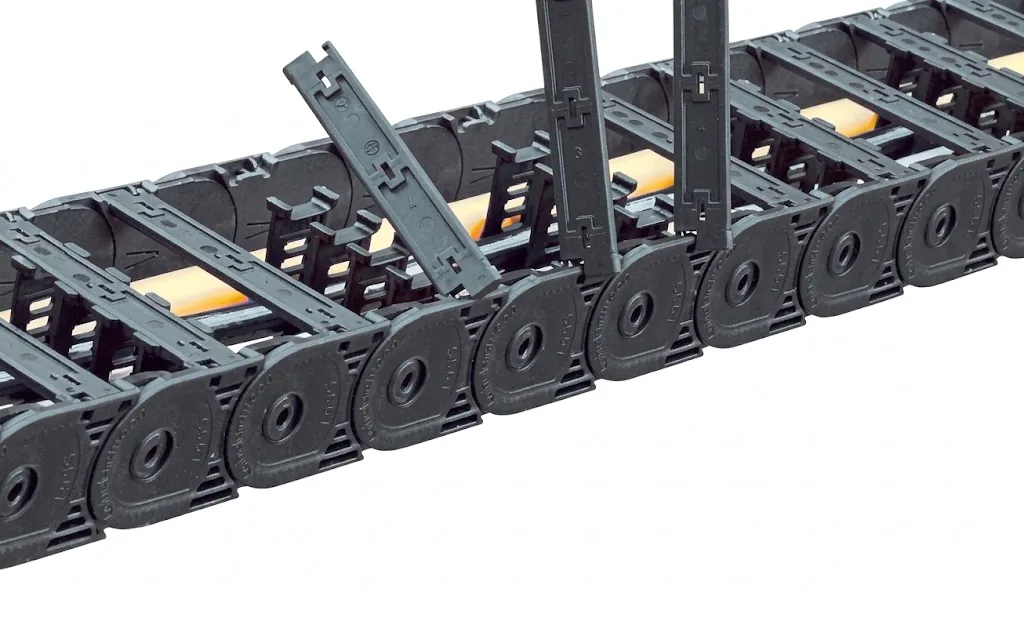
In a cable carrier the cables lie loose, with space around them. That is intentional: it lets them bend freely with every movement. But at the ends, at the fixed point and at the driver, they must be secured. That is what the strain relief does: clamps or brackets at the end fixing.
Without strain relief, this is what goes wrong:
- The cable creeps a little with every stroke.
- It pulls tight in the bend or bunches up at the ends.
- It starts to twist in the carrier, and eventually breaks.
So secure the cables at both ends, outside the bend. Clamp them without pinching them: a clamp that squeezes the jacket only moves the damage to another spot. More tips are in mounting a cable carrier.
Are your cables already twisted or bunched up in the carrier? The troubleshooting guide explains step by step how to fix it: cables twisting in the carrier.
Troubleshooting guideCables twisting in the carrierCables that start to coil or creep out of the carrier.Go to the solutionWhat does EN 62444 say?
EN 62444 is the standard for cable glands and cable entry in electrical installations. Among other things, it sets requirements for the strain relief of cables. The strain relief modules, cable combs and EMC clamps in our range are made to meet them. Which requirements apply to your installation depends on the application; that is stated in the standard itself and in the documentation of your machine.
Common mistakes
- Letting cables hang from the terminal strip only
- Pulling cable ties so tight that the jacket is squeezed
- Securing cables at only one end of the cable carrier
- Securing the cable in the bend of the carrier instead of at the end fixing
- Securing shielded cables without earthing the shield
Have the strain relief taken care of
If you wish, we supply cable carriers complete: cut to length, filled with your cables and with the strain relief and end fixings fitted. In the Cable carrier configurator you enter your cable package; a specialist checks the layout free of charge. Is a clamp missing on an existing carrier? You will find separate strain relief under parts for cable carriers. Rather have a proposal straight away? Request a quote.
Frequently asked questions
What is strain relief?
Securing a cable before the connection, so that pull, weight and vibration act on the fixing and not on the terminals or the connector.
Why is strain relief needed?
Without strain relief, pull, weight and vibration act directly on the connection. That leads to loose connections and faults. In a cable carrier, cables without strain relief start to slide and twist, and break.
What is the difference between strain relief and an EMC clamp?
Strain relief secures the cable mechanically. An EMC clamp earths the shield of a cable. Most EMC clamps do both, because they secure the cable with cable ties.
Where do you fit strain relief in a cable carrier?
At both ends, at the fixed point and at the driver, outside the bend. Inside the carrier itself the cables lie loose.
Does a cable entry also provide strain relief?
Often, yes. Split frames and cable entry plates with a second membrane clamp the cable as it passes through and so provide strain relief.
Next step
Calculate it yourself or browse the range. We check your result free of charge.
Series on this topic
Question about this topic?
Ask Olaf directly
Inside Sales at Wisman Techniek