Stalero Machinebouw from Barneveld has won the Innovatieprijs Regio Foodvalley 2026 in the Industry & Logistics category. The expert jury honoured the Matra ST 747, an automated machine line that uses a laser to take discarded solar panels apart. This was reported by IndustrieVandaag on 12 November. The award was presented on 27 October in Renswoude.
What the laser line does
A solar panel consists of layers of glass, film and cells that are glued together. According to Stalero, existing recycling methods cannot remove that adhesive completely, so valuable raw materials are lost. The new line takes a different approach:
- Dismantling first: the aluminium frame, the cables and the junction box are removed.
- Then the laser: a precise laser beam carbonises the adhesive between the layers so that they come apart. The layers are not shredded or mixed.
- Recovery: the aim is to recover glass, aluminium, silicon and silver as pure raw materials.
The line is about 25 metres long and processes whole and broken panels, with glass-film and glass-glass construction. A panel passes through in about 30 seconds. According to the report, the laser step uses about 0.5 kWh per panel, compared with about 25 kWh per module for pyrolysis. At eight operating hours a day, capacity comes to about 6,000 tonnes of solar panels a year.
Why this matters now
Solar panels have an economic life of about twenty years, and the first large numbers were installed from 2010 onwards. So the flow of discarded panels is getting under way. Stalero expects that the Netherlands will need two such machines in 2030 and ten in 2035. There is a fully developed prototype, and the company is now looking for recycling partners to bring the line into production.
What such a line asks of the moving parts
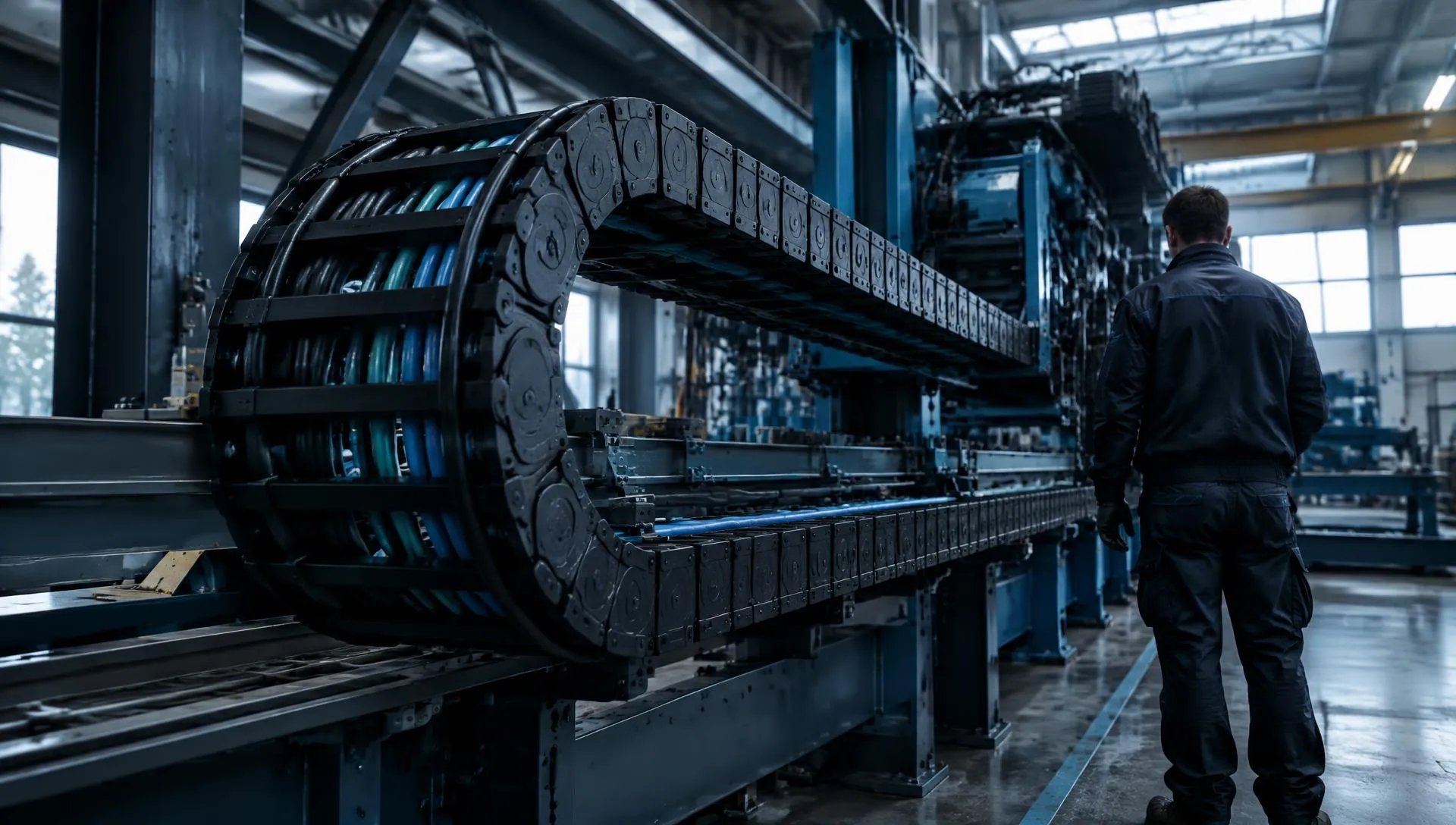
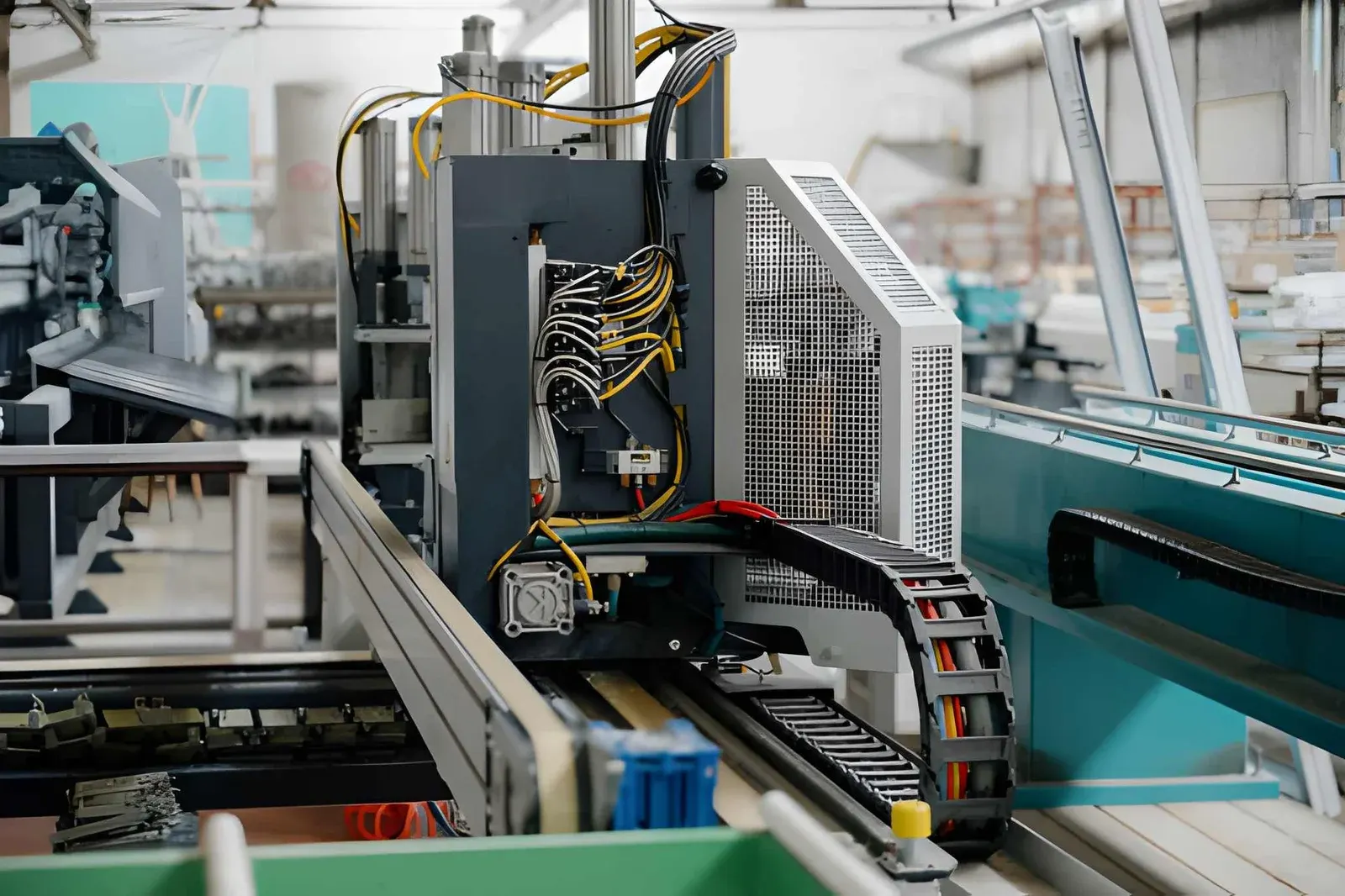
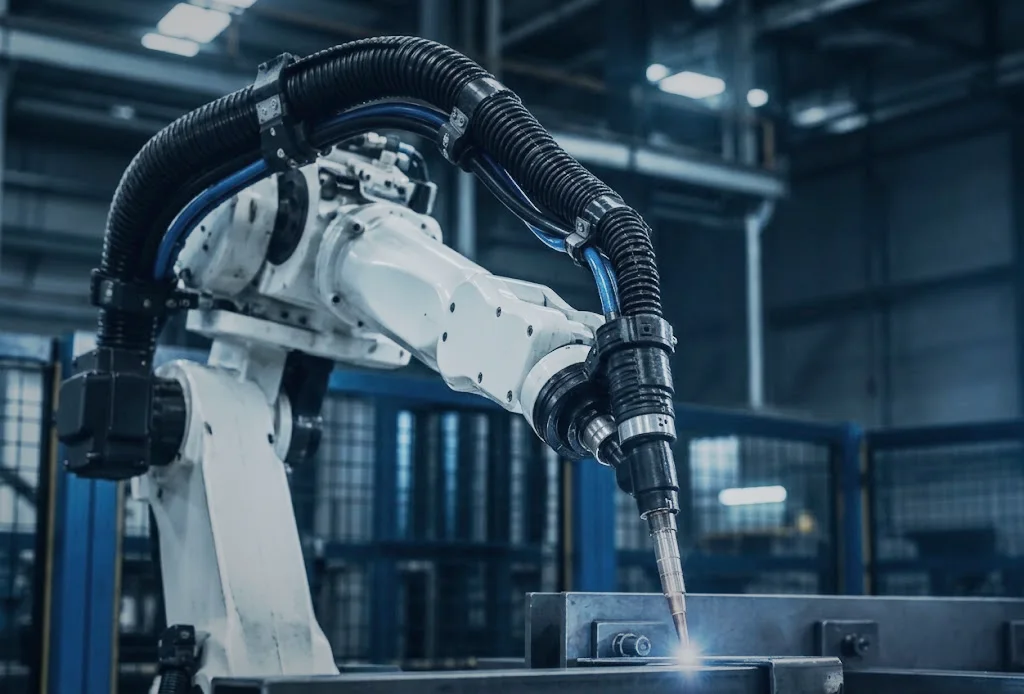
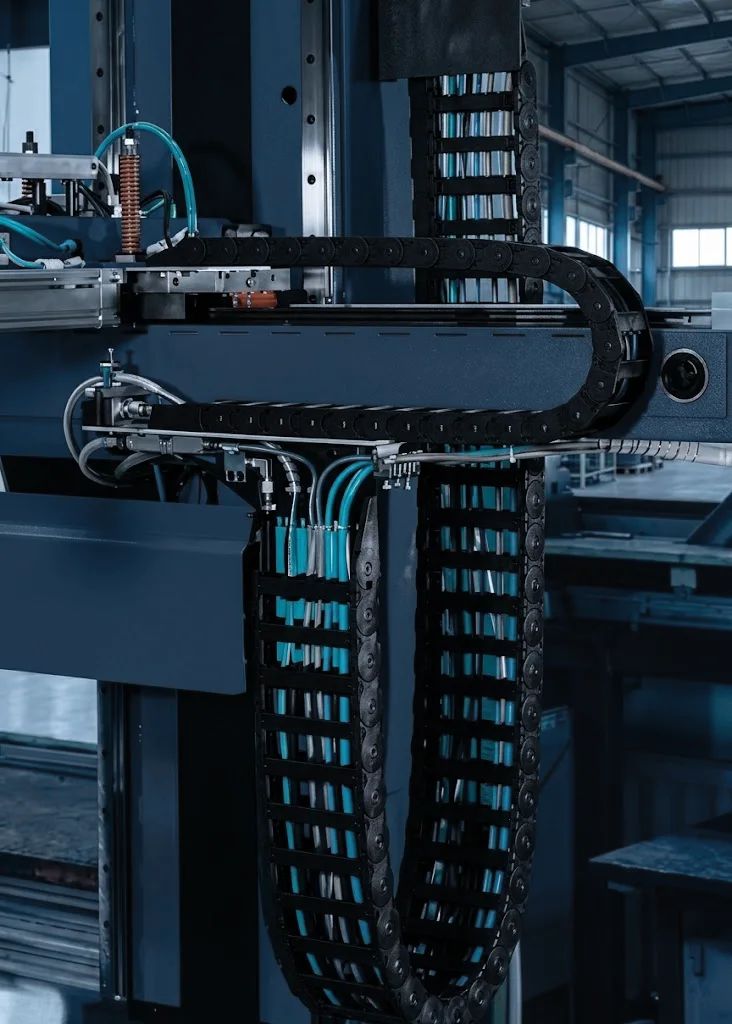
The report says nothing about how the axes and cable routing are built. But it is a type of machine we see more often: a long line with a fast cycle, a processing head that moves over the workpiece and an environment with dust and fumes. On machines like this, the cables and hoses to the moving parts often run through a cable carrier, and that is where much of the wear occurs.
Three points a machine builder in this sector pays attention to:
- Cycle time and cycles. One panel every 30 seconds means almost a thousand panels a day at eight operating hours, and every movement counts. Choose cables made for that number of cycles. How to recognise them is explained in flexible cable: when is a cable really flexible?.
- Dust and residues. Thermal processing and separating materials create dust. A closed or covered cable carrier keeps the cables clean. The trade-off is explained in open or closed cable carrier.
- Accessible for maintenance. A recycling line runs long days. A cable carrier you can open, and cables you can replace without stopping the machine for long, save a lot of time later.
What Wisman Techniek does
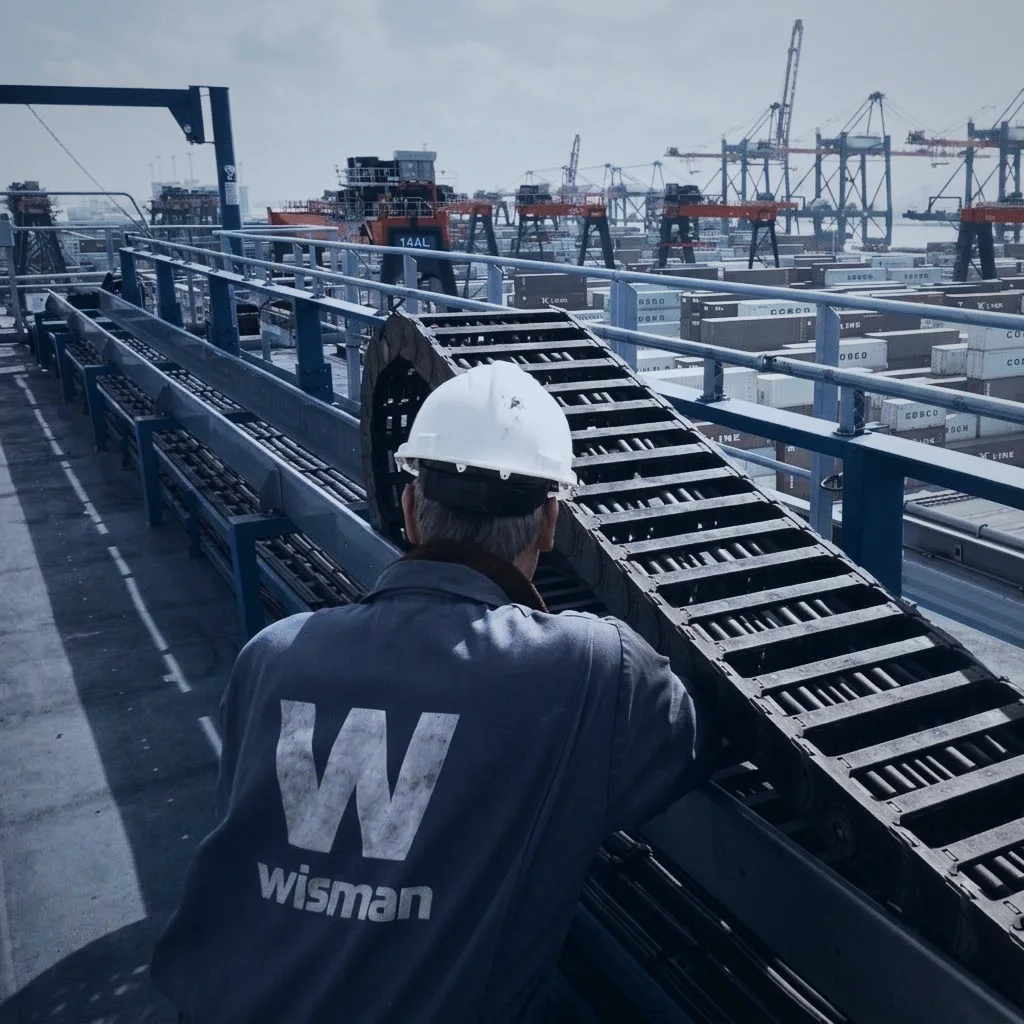
Wisman Techniek is the exclusive Dutch dealer of Tsubaki Kabelschlepp and supplies cable carriers to machine builders, from a single prototype to a series. If you are building a machine with a fast processing head, see cable carriers for laser cutting machines for suitable versions. In the configurator you put the cable carrier together with your own cable package, and we check your design free of charge.
Calculate it yourselfCable carrier configuratorCalculate, select and assemble a cable carrierOpen the cable carrier configurator