Cable carrier breaking?How to find the cause.
A cable carrier that breaks is almost never bad luck. There is a cause behind it: a carrier that is overloaded, wrongly installed or has reached the end of its life. Replacing it without finding that cause means it will soon happen again.
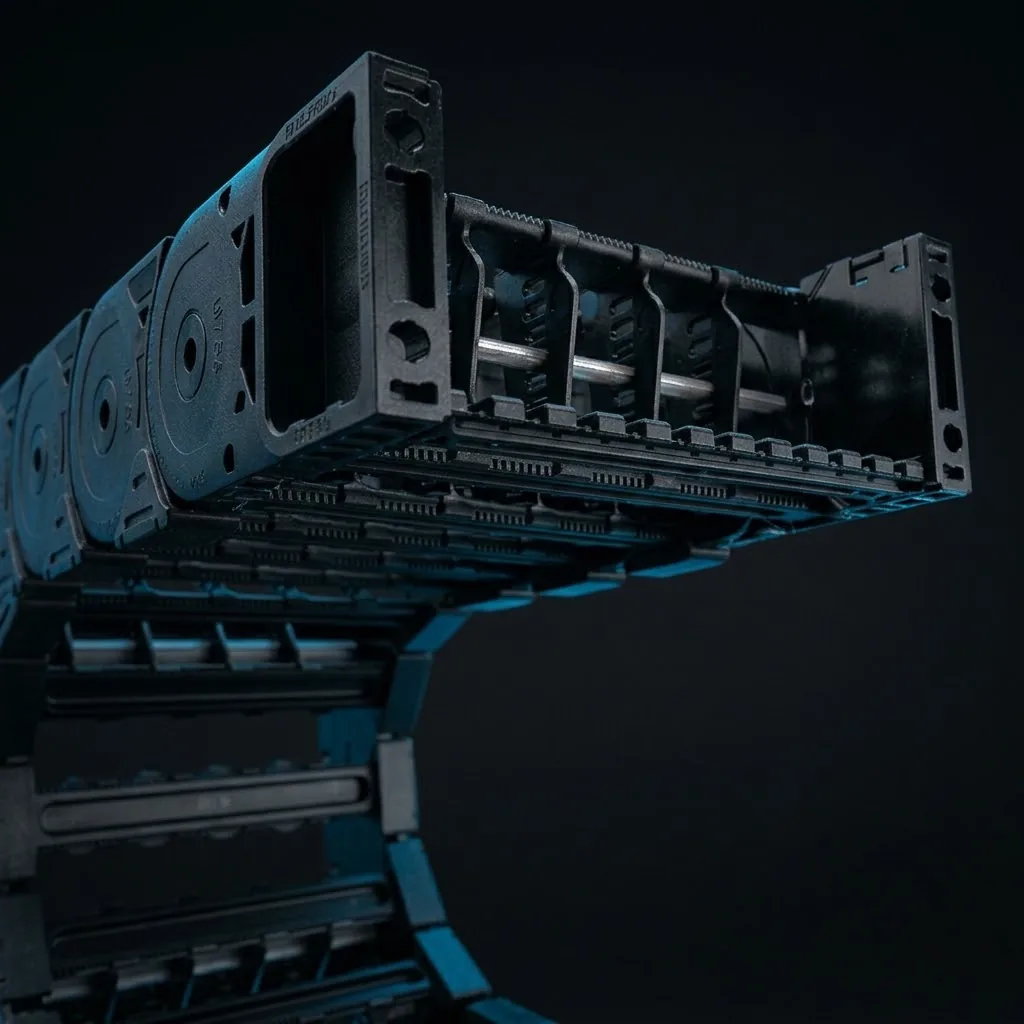
Is the machine at a standstill or are cables hanging loose? Call straight away. A broken carrier can also damage the cables within a few strokes.
Symptoms
Do you recognise this?
- Broken side plates or pivot points
- Cross connections that come loose or break off
- Links that come apart in the bend
- Cracks around the fastening at the driver point
You can check this yourself
- Does it keep breaking in the same place? Then the cause is often the installation.
- Are the driver and fixed point in line, at the right height?
- Has the machine been speeded up, or has the cable package been extended?
- Does the carrier sag in the self-supporting section?
Causes
What it is usually down to
Often several causes play a role at once. We look at the carrier, the installation and the movement together.
Let us take a look Do you already know which part is broken? Request it straight away01Carrier loaded too heavily
The cable package weighs more than the carrier can carry self-supporting, or the self-supporting length is too great. The carrier starts to sag and the hinges are loaded beyond what they are designed for.
02Excessive speed or acceleration
With a faster machine or an adjusted programme more force acts on the links. What went well for years can suddenly fail.
03Incorrect installation
A driver that is not in line with the fixed point, a wrong installation height or a carrier that runs against the machine causes lateral forces that the carrier cannot absorb.
04Jamming or rubbing
A carrier that snags on an obstacle, a trough or a cable hanging out is pulled apart on the next stroke.
05End of service life or environment
Plastic becomes brittle through UV, heat, coolant or chemicals. After many cycles every hinge wears.
Step by step
Fix it yourself
Have a fitter in house and want to do it yourself? This is the order we follow too.
- Level
- Medium
What you need
- Spare links or cross connectors of the same series and size
- Screwdriver or assembly tool for the cross connectors
- Photos of the break, in case you cannot work it out after all
Safety first. Only work on a machine that is stationary, de-energised and locked out against switching on. Secure axes that can move or drop. Follow your company's safety rules.
- (01)
Record the break
Photograph the break and note where in the carrier it is: in the bend, at the driver or in the self-supporting section. That tells you more about the cause than the part itself.
- (02)
Look up series and size
The type is usually on the side plate. Also note the inner width and number of links. That lets you request exactly the right parts.
- (03)
Open the carrier and free the cables
Open the cross connections around the break so that the cables lie loose. Do not pull on the cables and leave the strain relief in place.
- (04)
Replace links
Detach the damaged links and fit new ones of the same series. Mind the running direction: all links must point the same way.
- (05)
Remove the cause
Align the driver and fixed point, remove obstacles and check that the carrier runs freely through the whole stroke. Without this step it will break again.
- (06)
Testing at low speed
Let the machine run the full stroke a few times slowly and watch. Only then go back to production speed.
When to stop
Does the carrier break in several places, is it brittle or discoloured, or does it break again after replacement? Then the carrier is worn out or wrongly chosen, and a new link will not help.
Solution
Prefer to have it fixed? This is how we do it
Not just replacing, but making sure it does not happen again.
- 01Record the cause
- We look at the break, the installation and the movement and record why it broke.
- 02Calculate
- Weight, travel length, speed and acceleration go through the calculation rules. This shows whether the current carrier fits or whether a heavier series, a support or a channel is needed.
- 03Replace or repair
- Replacing individual links is possible if the rest is in good condition. If the carrier is worn out or was wrongly chosen, we will advise a suitable replacement.
- 04Correct the installation
- The driver, fixed point and any guide channel are properly aligned, so it does not happen again.
Range
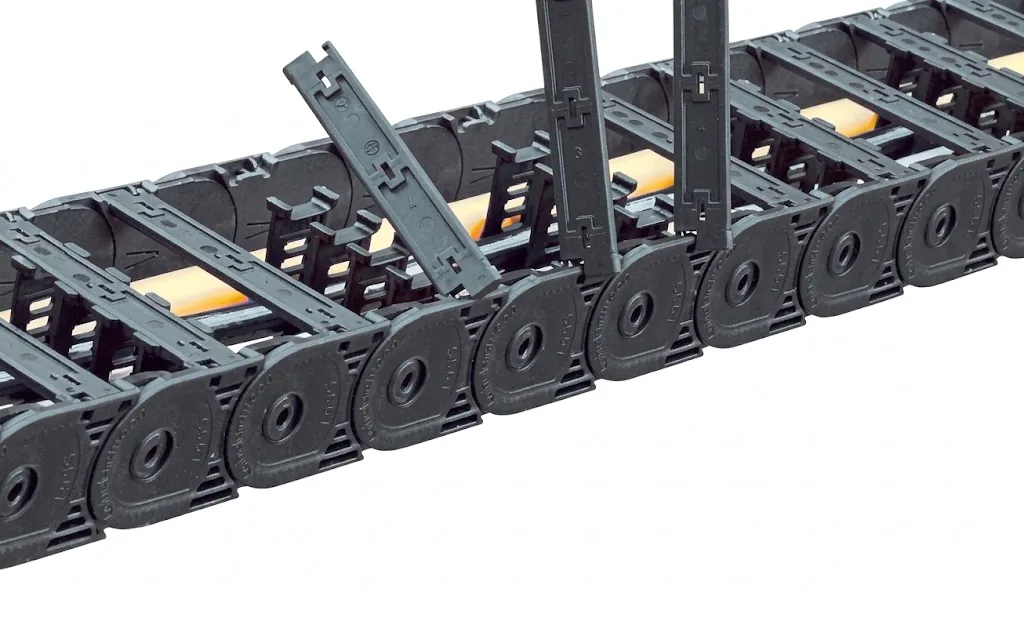
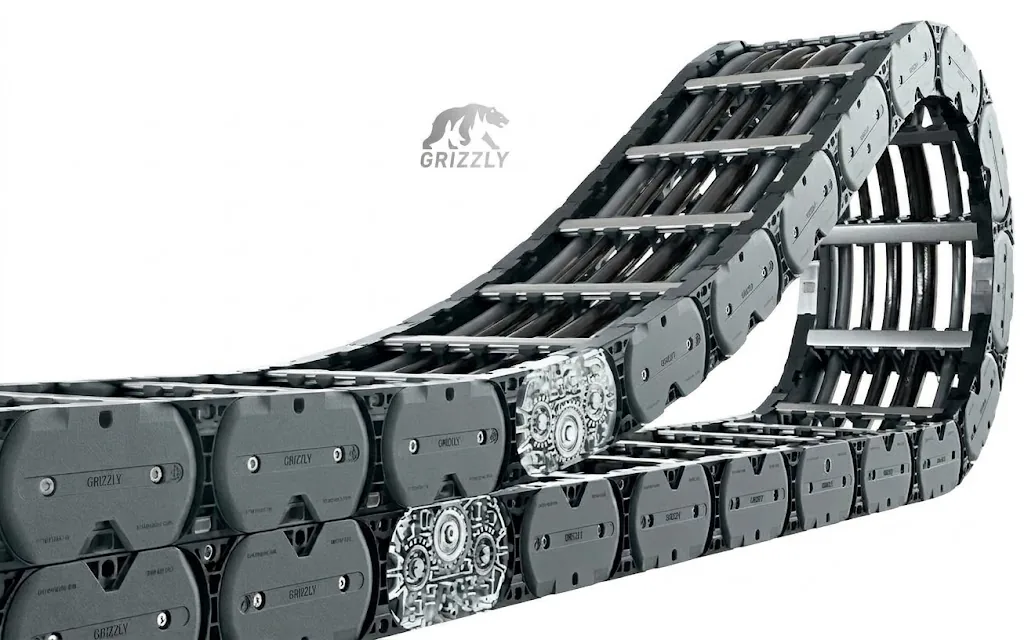
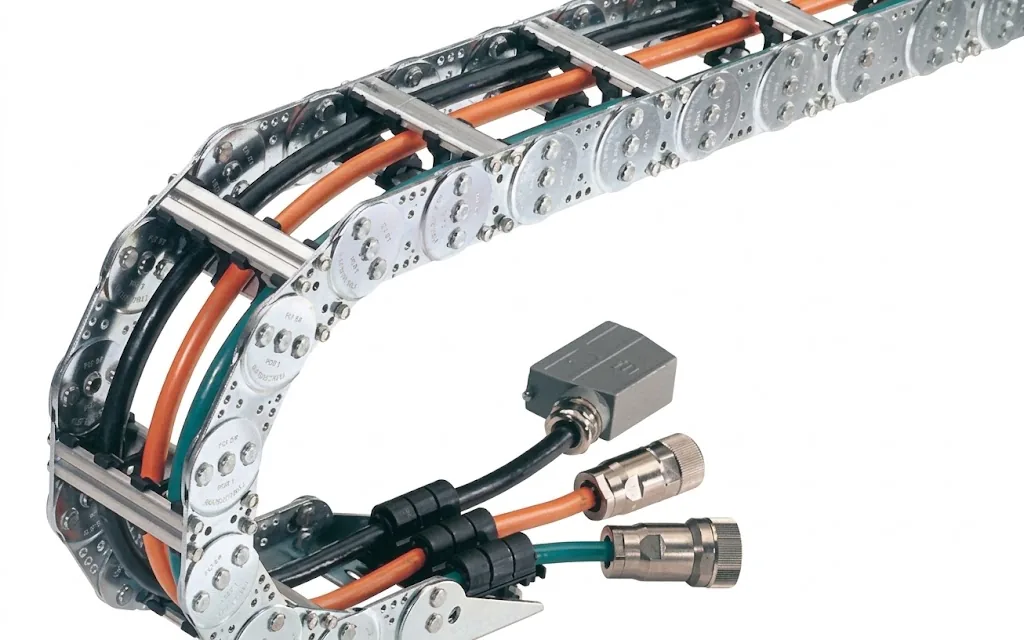
Series that prevent this
Frequently asked questions
About: cable carrier breaks
Troubleshooting guide
Other faults
Fault
Prefer us to
take a look?
Send a photo or video of the carrier and tell us what is happening. A specialist will look into it with you.
- Phone+31 88 002 3500
- E-mailverkoop@wisman-techniek.nl
- AvailableMon–Fri 08:30–17:00





11 specialists in Ruurlo
You speak directly to someone who knows.