Rotary cable carrier
Rotating in one plane,or moving in three.
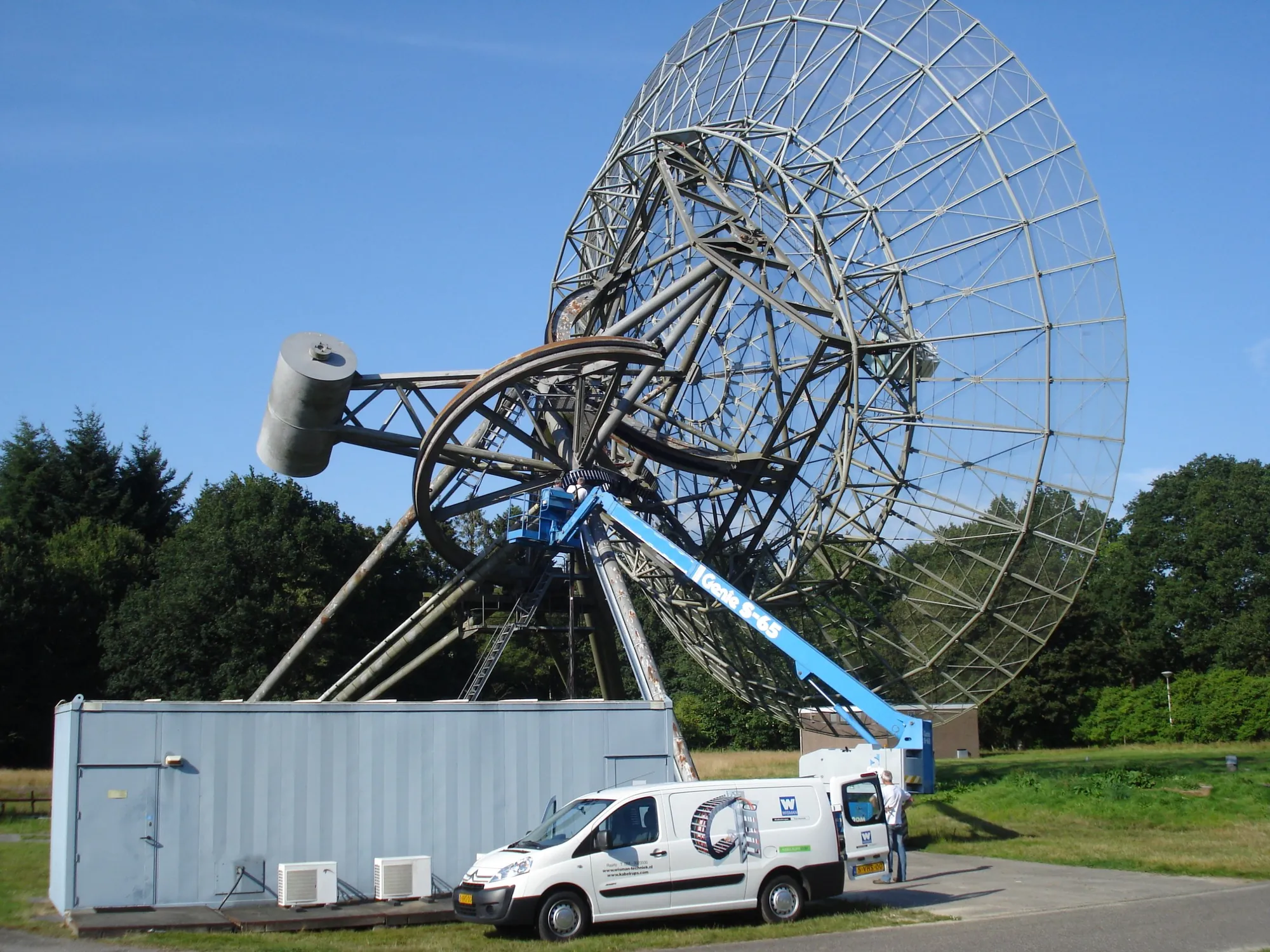
A rotary cable carrier follows a rotating movement, such as on a swing bridge or the axis of a telescope. If the cable moves in three directions at once, a protective hose fits rather than a cable carrier. Here you read when to choose which.
Explanation
What is a rotary cable carrier?
- Movement
- Rotation in one plane
- Rotation
- Often more than 360°
- Used
- S1250 from the S/SX series
- Guidance
- Housing with running and guide wheels
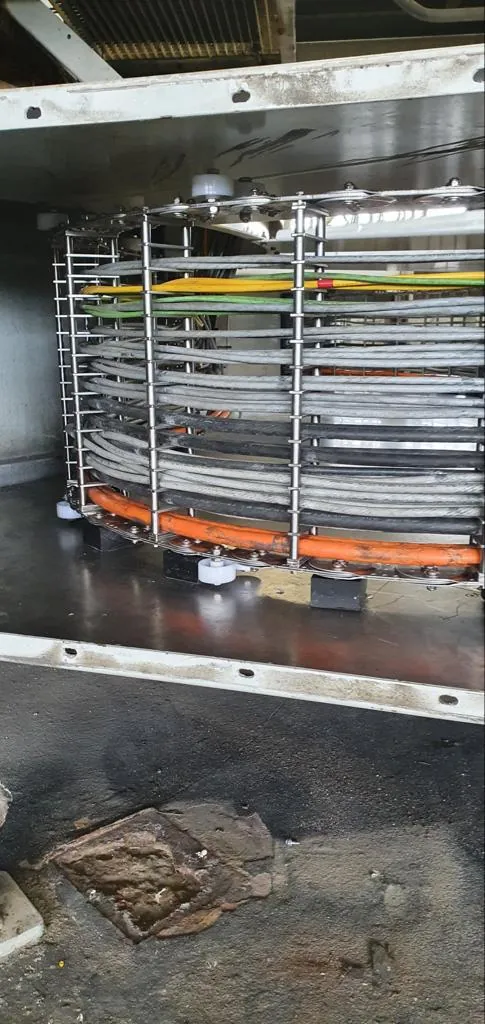
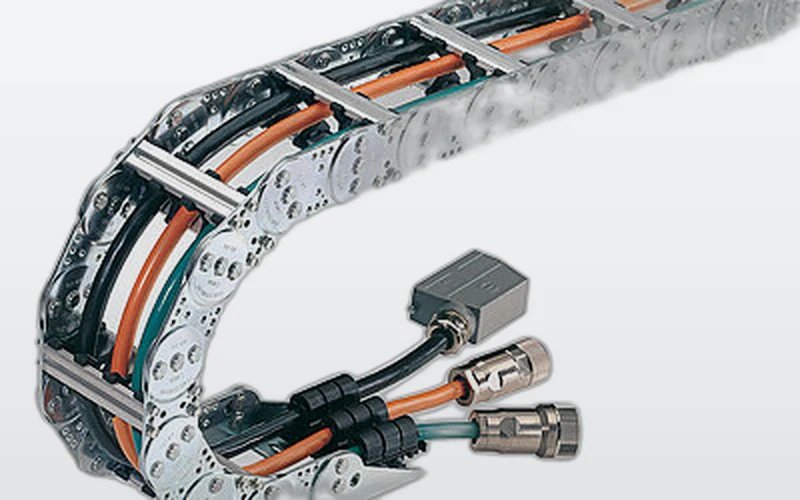
An ordinary cable carrier moves back and forth along a straight line. A rotary cable carrier moves with a rotating structure. The bend of the carrier then travels around the pivot point instead of along a travel path.
Rotary carriers are intended for rotating applications that often need a rotation of more than 360 degrees. The power and signalling cables move along without twisting around their own axis: they bend in the plane of the carrier, just as in a straight cable carrier.
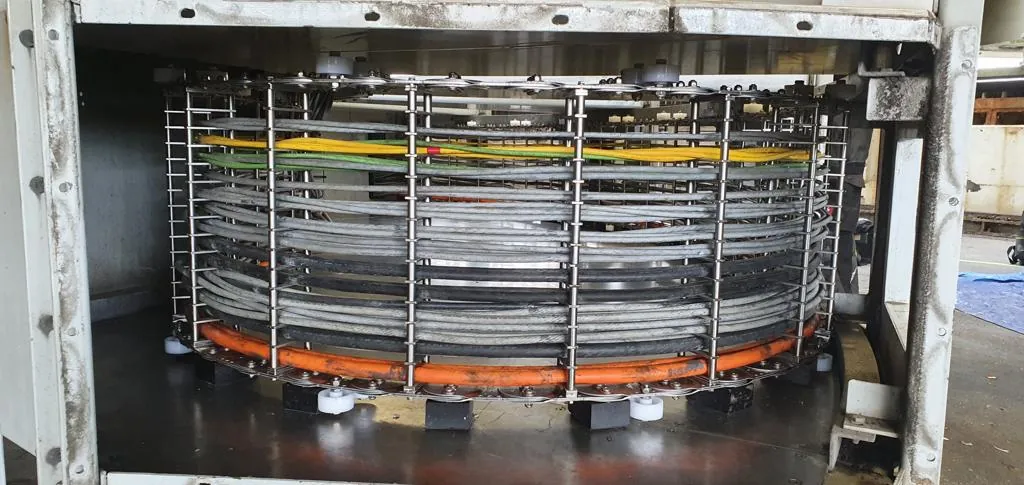
For the swing bridges of Sas van Gent and Sluiskil we used Kabelschlepp S1250 rotary carriers from the steel S/SX series. In the cramped pivot chamber the carrier was placed in a housing of our own design with running and guide wheels, so it runs smoothly through the bend without touching the walls.
When to use which
Rotary carrier or protective hose?
Static is a cable tray, linear is a cable carrier, three-dimensional is a protective hose. A rotating movement in one plane is the exception: that is where a rotary cable carrier runs.
- Movement
- Rotary cable carrierRotating around one axis, in one plane
- Protective hose or dress packTwisting and bending at the same time, in all directions
- Where
- Rotary cable carrierSwing bridges and rotating axes
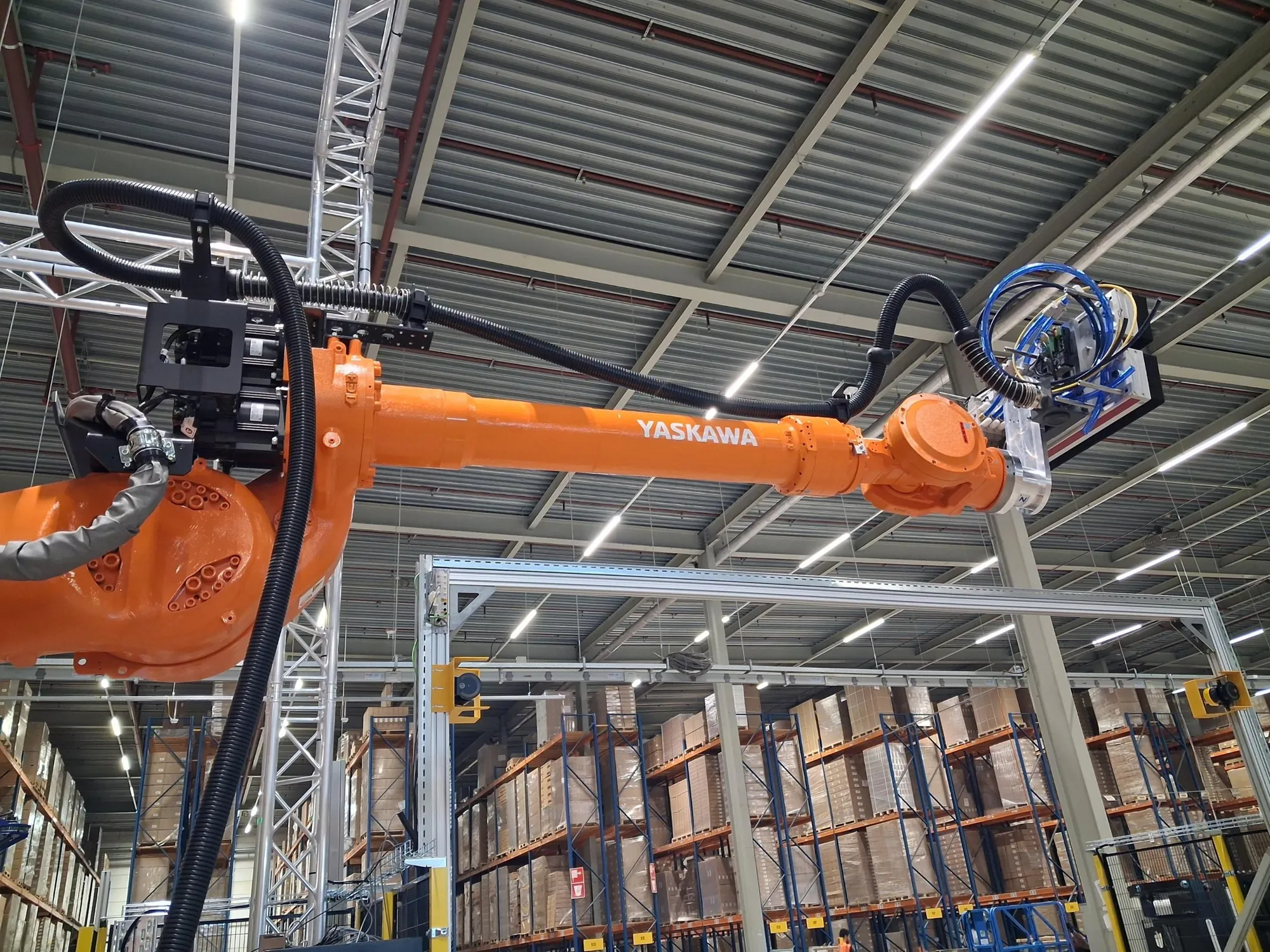
- Protective hose or dress packRobot arms
- Cable guidance
- Rotary cable carrierCable carrier in a guide or housing
- Protective hose or dress packCorrugated hose with holders, ball joints and retraction system
- Cables
- Rotary cable carrierFlexible cables for the cable carrier; they bend but do not twist
- Protective hose or dress packTorsion-resistant cables, made to length
- From practice
- Rotary cable carrierSwing bridges Sas van Gent and Sluiskil, telescope antennas
- Protective hose or dress packRetrofit at Mujin Europe, protective hoses at CREDUN Automation
Choose
What to look out for with a rotary carrier
01Rotation angle and direction
How many degrees does the structure rotate, and in one or two directions? That determines the length of the carrier and where the fixed point goes.
02Installation space
Space around a pivot axis is often tight. Measure the pivot chamber or housing before choosing a series.
03Guidance in the bend
The carrier must run supported and guided. At Sas van Gent, running and guide wheels in a dedicated housing did that.
04Environment
Outdoors and above water you choose a robust design. For the swing bridges that became a steel carrier.
05Cables and radius
Use flexible cables for the cable carrier and keep to the radius: at least 7.5 × the diameter of the thickest cable.
06Maintenance
Bridges and locks do not move often, but they must always work. Agree on a fixed maintenance plan.
Movement in 3D
Moving in three directions: the protective hose
A cable carrier bends in one plane. If the cable twists and bends at the same time, as on a robot arm, a Reiku protective hose or dress pack takes over.
- 01Follows every direction
- A protective hose follows movement in all directions, including rotation. That is why it runs along robot arms.
- 02Absorbs the rotation
- Ball joints and swivel flanges with 360° rotation absorb the rotation, so the cables do not twist.
- 03Keeps the length right
- A retraction system pulls the package back so it does not whip or sag.
- 04Wear parts replaceable separately
- The most heavily loaded spots get wear parts that you replace without renewing the whole package.
In practice
Rotation and movement in practice
Featured project
Cable management for the swing bridges at Sas van Gent and Sluiskil with Kabelschlepp rotary carriers
For the swing bridges at Sas van Gent and Sluiskil, we used Kabelschlepp S1250 rotary carriers in a housing of our own design with running and guide wheels, and took care of assembly and installation on site.
- Customer
- Central government
- Location
- Sas van Gent and Sluiskil
- Sector
- Infrastructure
- Solution
- Cable carriers
- Environment
- Outdoors, rotating movement in a tight housing
- Assembly
- Own housing with running and guide wheels, installation on site
Read on
Practical articles from our specialists: choosing, calculating, installing and maintaining. No sales talk.



Written by
Olaf Otten, Daan van Weeghel, Joep Hendriks
- Basic · 9 minCable carrier, protective hose or cable tray: which?
- Choose & calculate · 11 minChoosing a cable protection hose: size and series of your flexible cable hose
- Choose & calculate · 7 minSteel or plastic cable carrier: how to choose
- Robotics · 10 minCable breakage on your robot: causes on axes 4 to 6

Frequently asked questions
Questions about rotary cable carriers
Contact
A rotating movement
in your installation?
Send your drawing, the rotation angle and the cable package. We help decide which solution fits, from rotary carrier to protective hose.
- Phone+31 88 002 3500
- E-mailverkoop@wisman-techniek.nl
- AvailableMon–Fri 08:30–17:00



11 specialists in Ruurlo
You speak directly to someone who knows.