

Short answer
An outdoor cable carrier must withstand sunlight, rain, frost and dirt. Choose a type the manufacturer declares suitable for outdoor use, and check whether that applies to a clean or a dirty environment. Give long travel lengths a channel that keeps the carrier straight even in wind, choose cables with a jacket for outdoor use and movement, and keep the carrier accessible for inspection.
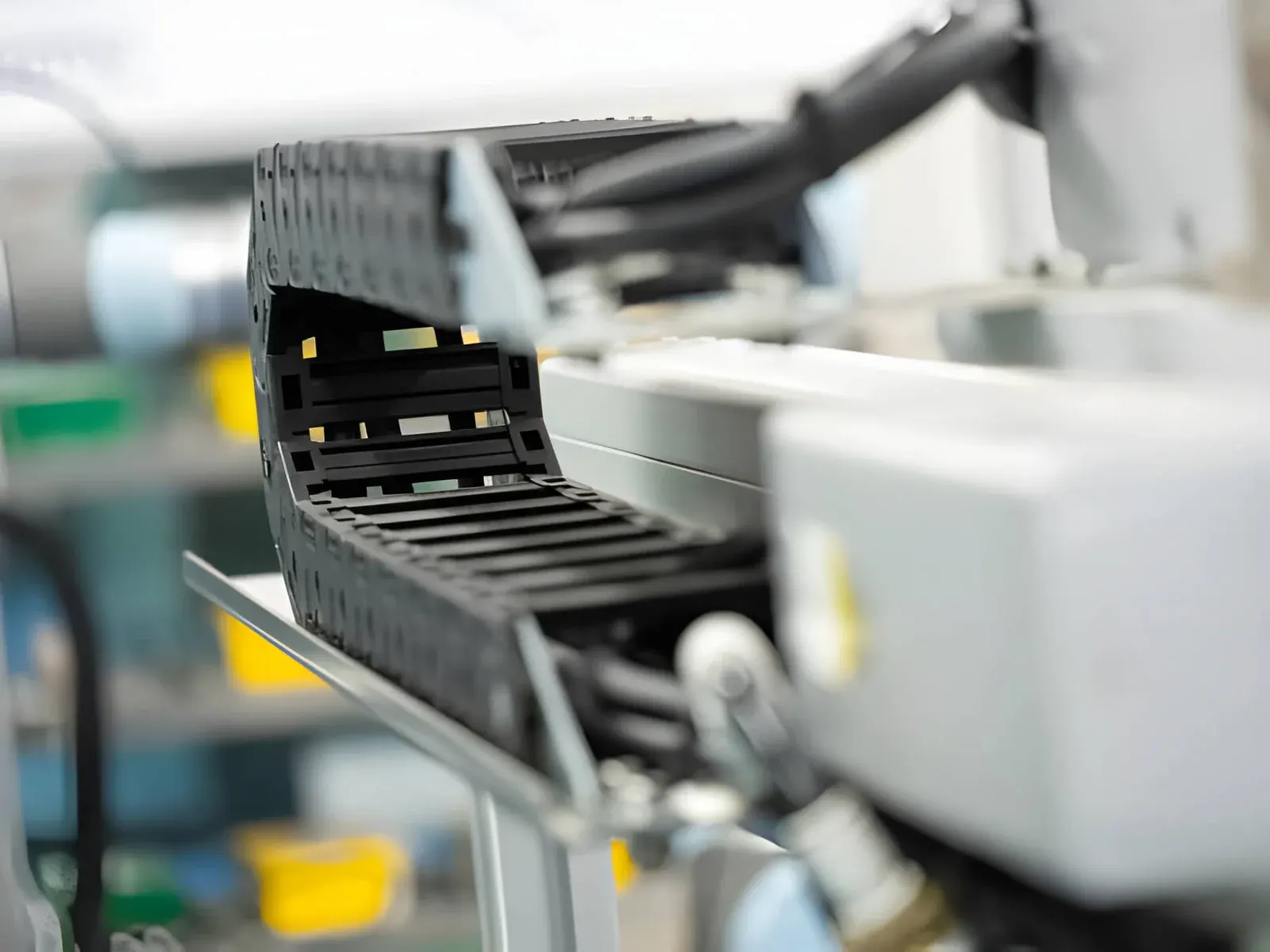
An outdoor cable carrier has more to endure than the same carrier inside a hall. Sunlight, rain, frost, wind and dirt act on the links and the cables all year round. Still, a cable carrier for outdoor use is not a separate product. You choose a type that the manufacturer declares suitable for outdoor use, you provide the right guidance and you choose cables that can handle the weather and movement. Get those three points right and you have an outdoor carrier that lasts for years.
Below you can read what the weather affects, how to choose the type and what you do differently from indoors during installation and maintenance.
Where are cable carriers used outdoors?
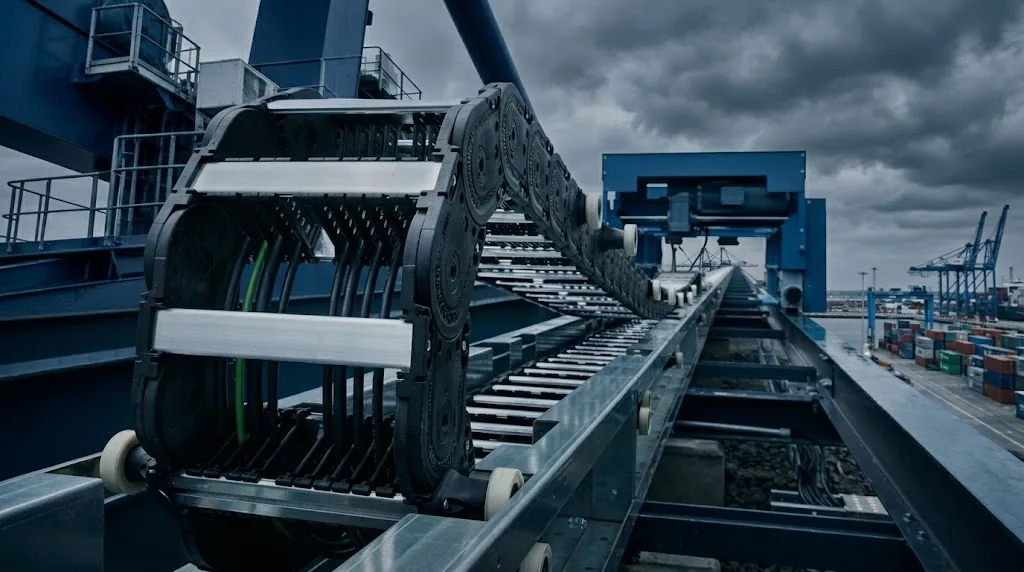
Outdoors you mainly see cable carriers where a machine or structure moves over a long distance:
- Cranes: gantry cranes, container cranes and their trolleys. Cranes often involve long travel lengths. Read more under cranes and ports.
- Bridges and locks: movable bridges, lifting gates and sluice gates. These call for heavy-duty versions that must work reliably for years, see hydraulic engineering and infrastructure.
- Ships and offshore: deck cranes, gangways and other movement on deck, with salt and moisture as an extra load.
- Open-air storage and handling: stackers, loading installations and mobile machines.
What these applications have in common: the carrier is exposed to the weather, is often harder to reach and a breakdown costs a lot of time. That is why it pays to get the choice right the first time.
What does the weather do to a cable carrier?
Sunlight. Over time, UV light attacks plastic and cable jackets. The material has to be made for it. With a type the manufacturer did not intend for outdoor use, you do not know how it will behave after a few years in the sun.
Rain and moisture. Water itself is not a problem for a plastic carrier, because plastic does not rust. With steel, corrosion does play a role. That is why the S series comes in galvanised steel and, as SX, in stainless steel. You use the SX outdoors, offshore and wherever salt is involved.
Frost and cold. Some materials get stiffer in the cold. For the carrier itself you deal with that by choosing a type intended for outdoor use. For the cables it is a bigger issue: a PVC jacket becomes stiff in the cold and can crack in a moving carrier. More on that below.
Wind. Over a long distance a carrier catches wind. A self-supporting section can then start to swing, and a gliding section can run out of the channel. That is why guidance matters more outdoors than indoors.
Dirt, leaves and ice. Outdoors, all sorts of things blow into and onto the carrier. Dirt builds up in a channel and ice can form in winter. That hinders the movement and speeds up wear.
Which cable carrier is suitable for outdoor use?
Start with the manufacturer's data. Our type data lists for each type the environments it is suitable for. There is a difference between outdoor, clean and outdoor, dirty. A crane on a quay with dust and salt spray is something else than a sluice gate in a clean outdoor setting.
A few examples from our range:
| Series | Material | Version | Suitable according to our data for |
|---|---|---|---|
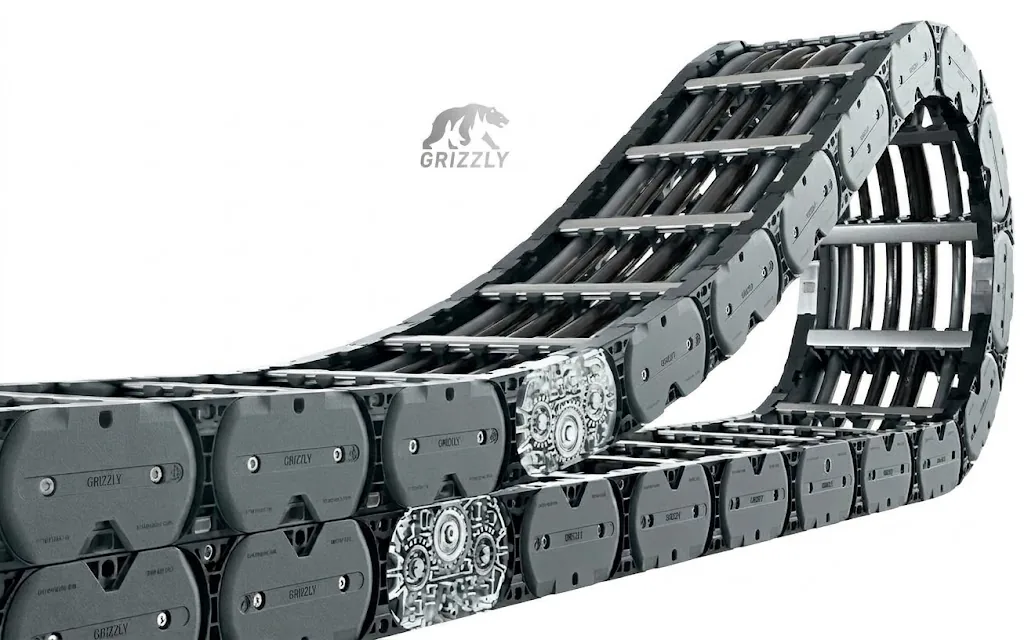
| UNIFLEX Advanced | Plastic | Open | Outdoor clean and dirty, also marine |
| M | Plastic | Open | Outdoor clean and dirty |
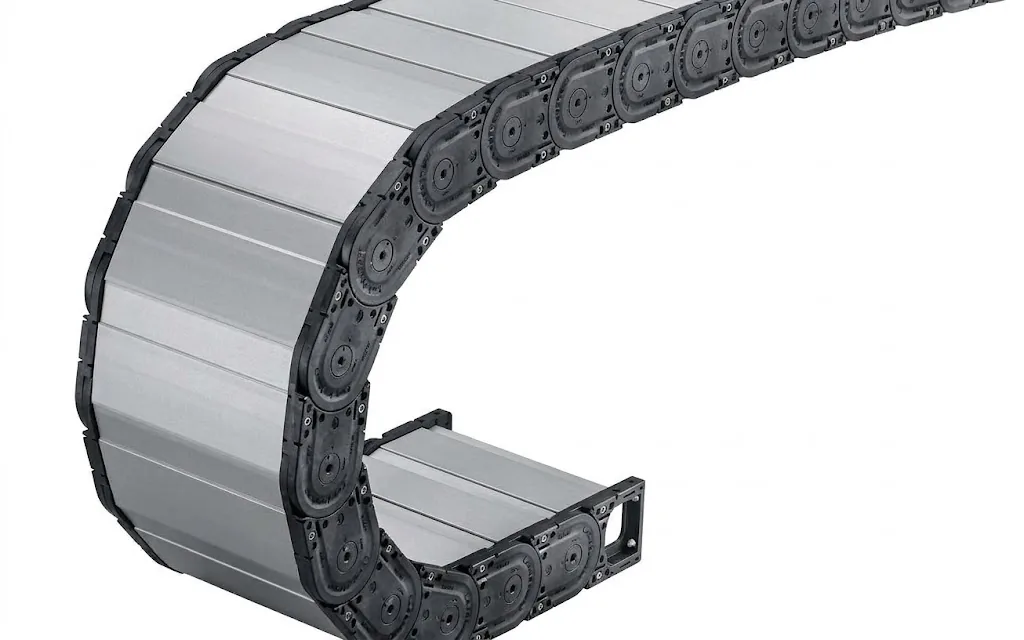
| MT | Plastic | Closed | Outdoor dirty |
| TKHP | Plastic | Open | Outdoor, heavy duty, marine, long travel lengths |
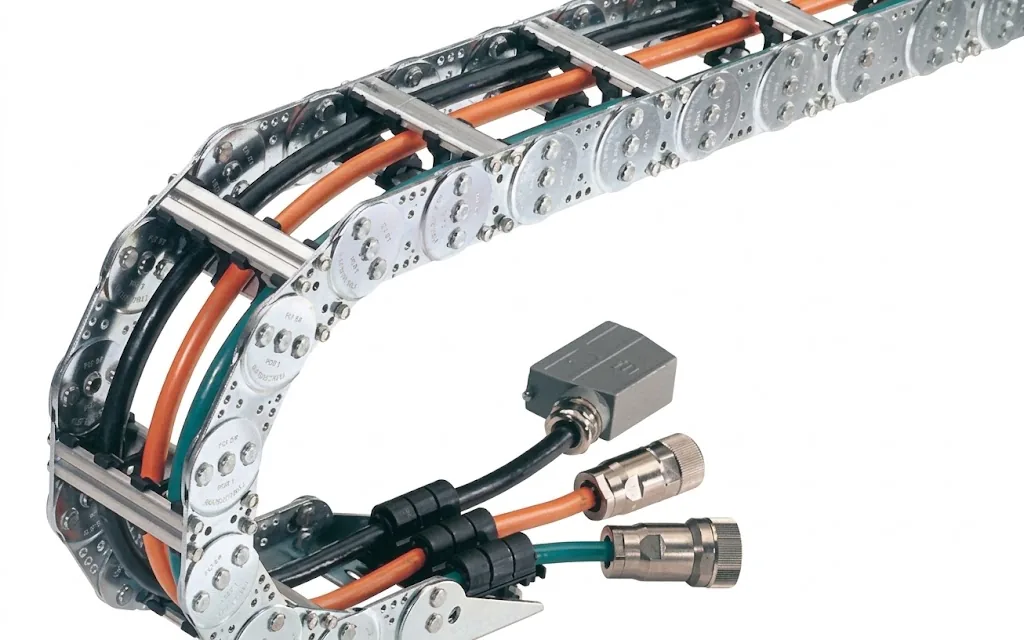
| S/SX | Steel / stainless steel | Open | Outdoor dirty, heavy duty, marine |
The UNIFLEX Advanced is a good starting point for most outdoor applications with a normal travel length. The M series comes into view for larger cable packages and longer self-supporting sections. If a lot of dust or dirt blows onto the cables, look at the closed MT. For cranes with a travel length of hundreds of metres you end up with the TKHP. If the load is heavy or salt is involved, the steel S/SX is the choice.
So outdoors, plastic or steel is not a fixed choice. Plastic is lighter and does not rust. Steel is stronger under heavy loads and over long self-supporting lengths. The trade-off is worked out in steel or plastic cable carrier.
Calculate it yourselfCable carrier configuratorCalculate, select and assemble a cable carrierOpen the cable carrier configuratorIn the configurator you indicate under environment that the carrier is outdoors. The configurator takes this into account in the types it suggests, together with the travel length and cable package you enter.
Does an outdoor cable carrier need a channel?
For a short travel length that can be self-supporting, not always. For a long outdoor travel length, yes. The upper run then lies on the lower run and glides in a guide channel. The channel keeps both runs straight above each other, even when it is windy.
Outdoors, pay attention to two things:
- (01)Material of the channel. Galvanised steel is the standard. With moisture or outdoors you are more likely to choose stainless steel. Aluminium is light and resistant to seawater.
- (02)Removal of dirt. Dirt stays in a closed channel. An open, modular channel such as the TKSG lets dirt fall through more easily. That is an advantage outdoors and on cranes.
Read more about sizes and versions in guide channel for a cable carrier. How to build a long gliding setup is explained in cable carrier for long travel.
Which cables do you use in an outdoor cable carrier?
Outdoors, the cables are often the weak point, not the carrier. A cable that lasts for years indoors can break much sooner outdoors if the jacket cannot handle sun and cold.
- Choose a jacket for outdoor use and movement. Check the data sheet to see whether the series is UV-resistant and suitable for outdoor use.
- Avoid PVC in the cold. PVC becomes stiff when it is cold. In a moving carrier a stiff jacket can crack. PUR and TPE stay more flexible. The difference is explained in PUR or PVC cable.
- Account for the long travel length. With long outdoor travel lengths, such as on cranes, you naturally end up with the heavier cable classes.
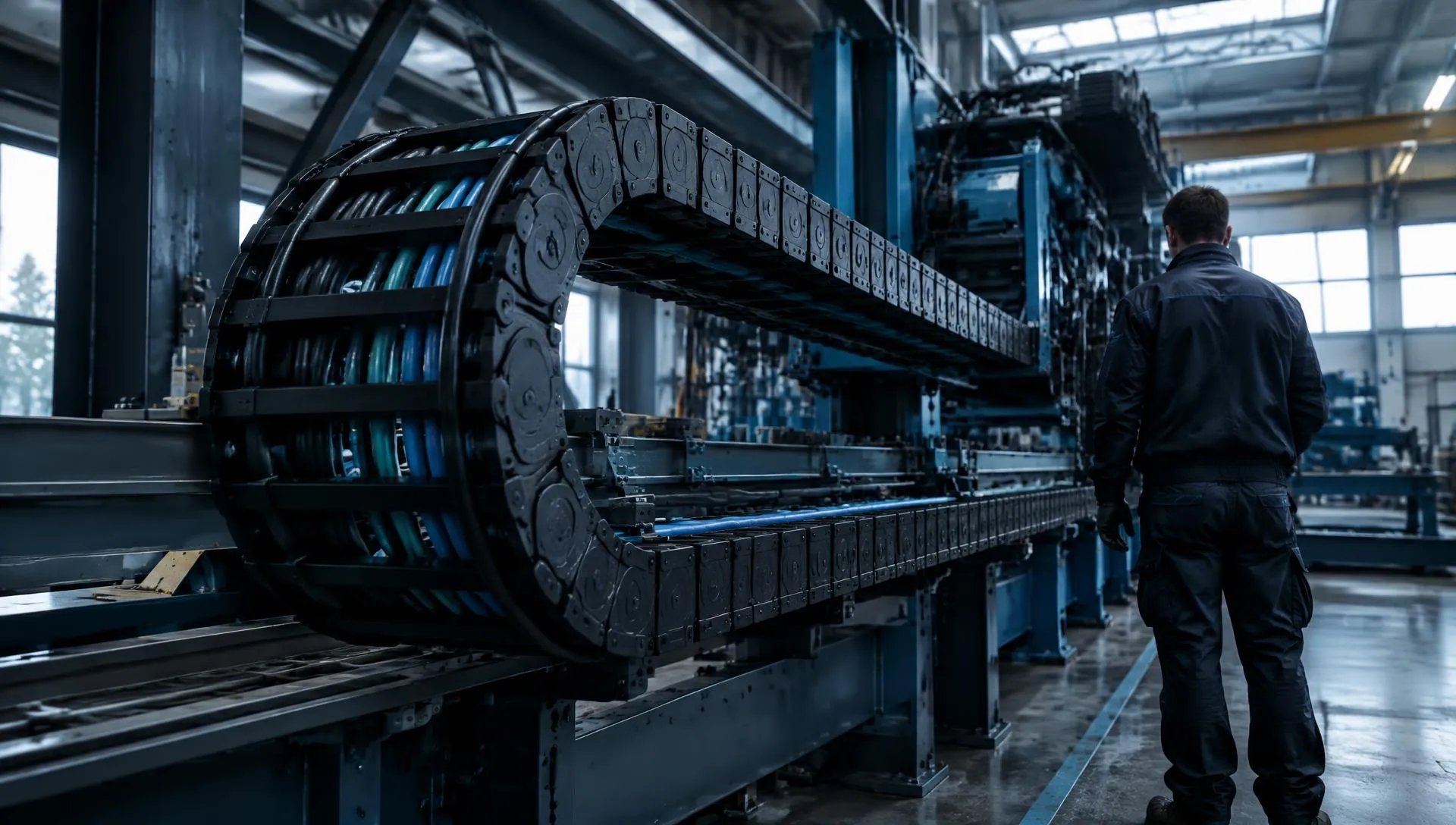
With the Cable finder you search for a TRAXLINE cable by type, cores, travel length and jacket. Hydraulic hoses outdoors need the same attention, see hydraulic hoses in a cable carrier.
What do you do differently outdoors during installation and maintenance?
Installation follows the same rules as indoors: fixed point and driver properly aligned, strain relief on both sides and the cables laid in without tension. Outdoors, a few points are added:
- Keep the carrier accessible. On a crane or bridge the carrier is often high up or above water. When designing, plan where you can stand to inspect it and to replace cables.
- Choose the opening side deliberately. Will you be able to open the carrier on the side you can reach? With many types you choose between opening on the inside or the outside.
- Check more often after storms and in winter. After strong wind, check whether the carrier still lies straight in the channel and whether there is dirt or ice in it.
- Clean the channel. Leaves, sand and other dirt in the channel cause rubbing and a carrier that runs out of the channel.
Outdoors, a carrier wears differently than indoors. With the Carrier check you go through the main points and get a status: OK, attention or action needed. If the carrier is already running out of the channel, see cable carrier runs out of the channel in the troubleshooting guide.
Calculate it yourselfCarrier checkHow is your cable carrier doing? Check it yourselfStart the carrier checkDo you have an outdoor carrier you would rather have checked? We carry out maintenance and inspection on site, also on cranes, bridges and locks. Not sure about the type for a new machine? Send the travel length, the environment and the cable list with a quote request. We check the choice free of charge.
Frequently asked questions
Can any cable carrier be used outdoors?
No. Outdoors, only use a type the manufacturer declares suitable for it. Also check whether that applies to a clean or a dirty outdoor environment.
Is plastic or steel better for an outdoor cable carrier?
Both are possible. Plastic is lighter and does not rust. Steel is stronger under heavy loads and over long self-supporting lengths. If salt is involved and you choose steel, go for stainless steel, such as the SX.
Why do cables break sooner outdoors?
Usually because of the jacket. Sun attacks a jacket that is not made for outdoor use, and PVC becomes stiff in the cold. In a moving carrier such a jacket will then crack. Choose a cable with a jacket for outdoor use and movement.
Does wind affect a cable carrier?
Yes, especially over long sections. A self-supporting section can start to swing and a gliding section can run out of the channel. Good guidance keeps the carrier straight.
How often should I check a cable carrier that is outdoors?
Include it in the regular maintenance round and check extra after strong wind and in winter. Look out for dirt and ice in the channel, the position of the carrier and the cables.
Next step
Calculate it yourself or browse the range. We check your result free of charge.
Series on this topic
Question about this topic?
Ask Bas directly
Cable Carriers Specialist at Wisman Techniek