

Short answer
In the food industry, choose a cable carrier that can handle water and cleaning agents and where dirt does not stay trapped. Usually that is an open plastic carrier, because plastic does not rust and water drains out again. If it has to be steel, choose the stainless steel SX version and a stainless steel guide channel. Choose the cables to suit the cleaning agent and seal the transition to the cabinet with a hygienic cable entry.
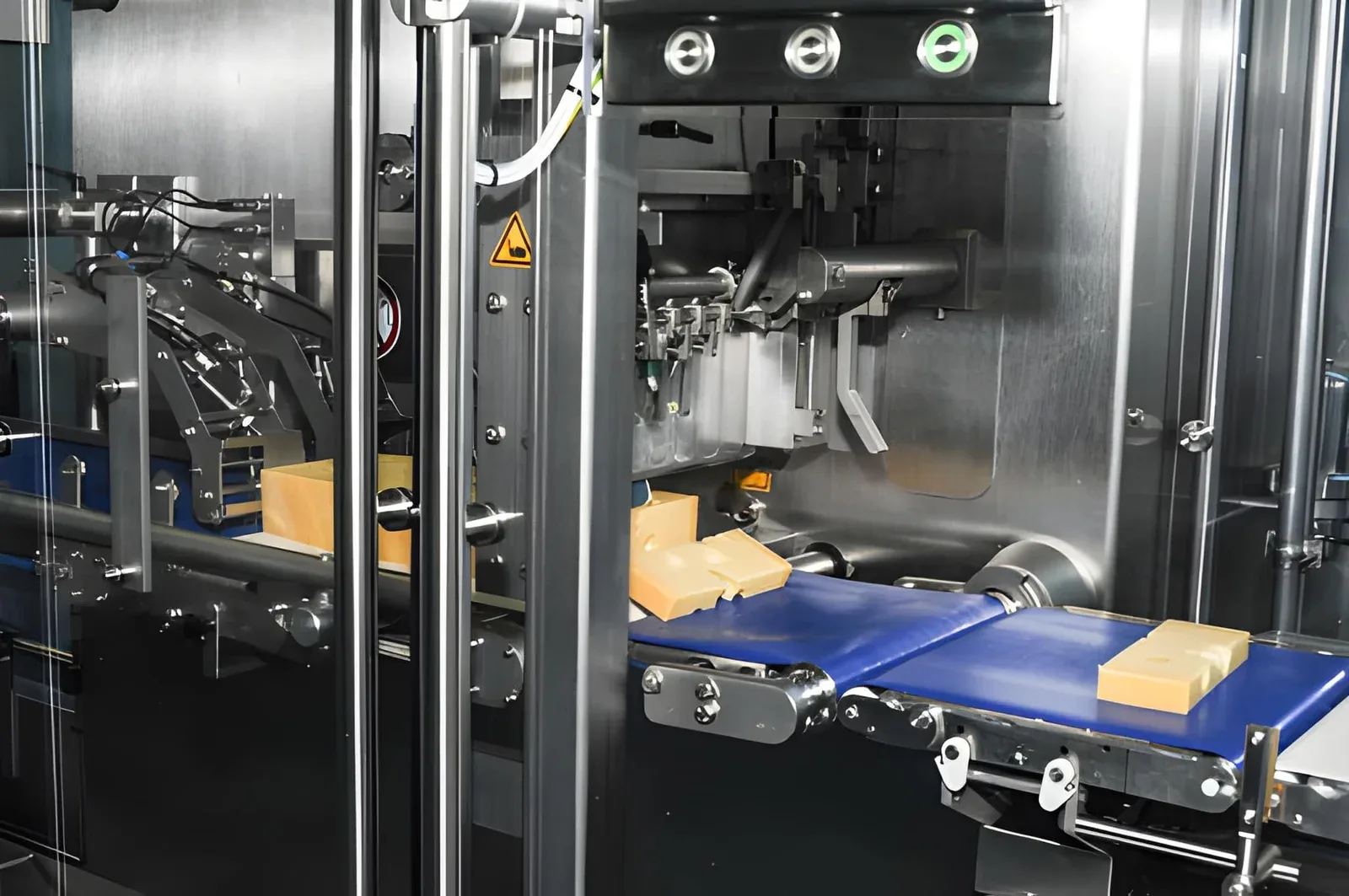
A cable carrier in the food industry has to do two things at once: make many short, fast strokes and withstand wet cleaning without leaving dirt behind. For most packaging and processing lines, an open plastic cable carrier is the best choice. Plastic does not rust, water drains out again and you can see at a glance whether residue is stuck between the links. Where steel is needed, choose the stainless steel SX version. Below you can read how to choose the carrier, the guide channel, the cables and the entry into the cabinet.
What does the food industry demand of a cable carrier?
In a food or packaging line, three loads come together:
- Cleaning. Lines are often cleaned wet, with water and cleaning agents. Anything that cannot withstand this will corrode, crack or discolour.
- High cycle rate. Packaging modules make many short strokes per minute. That calls for a light, quiet carrier with a small bending radius.
- Little space. Modules are compact. Every millimetre of installation height and outer width counts.
On top of that, the carrier must not become a place where product, dust or water gets caught. Whatever stays behind is hard to clean and also abrades between the links and on the cables.
Which cable carrier do you choose in the food industry?
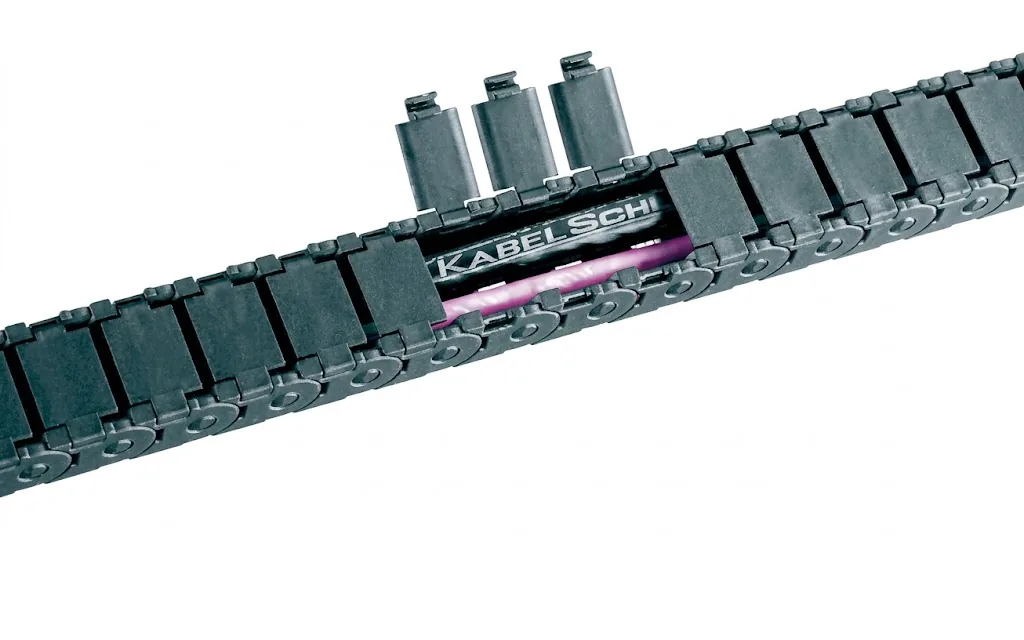
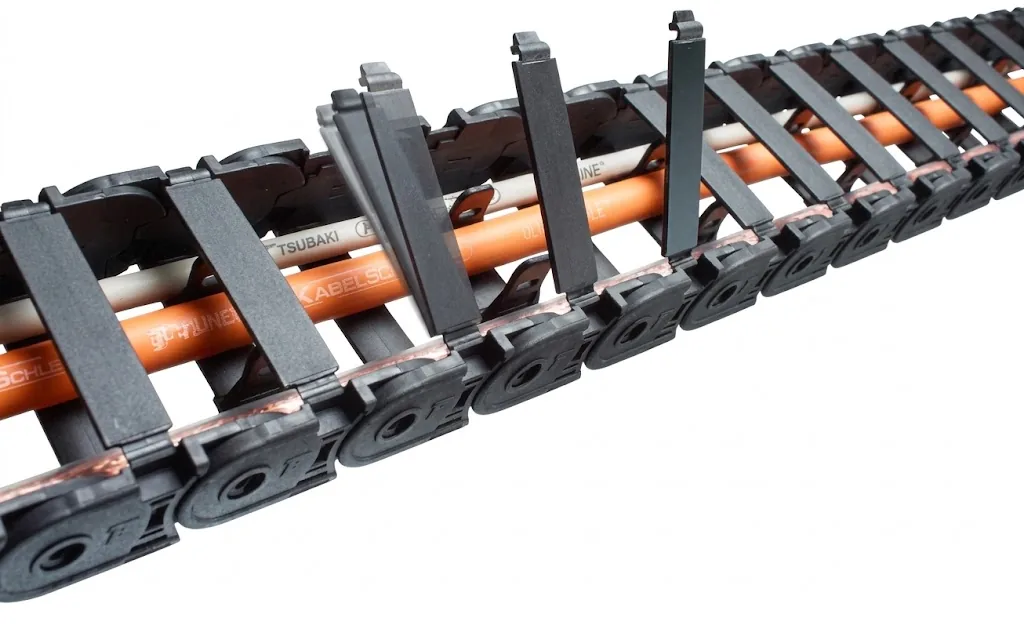
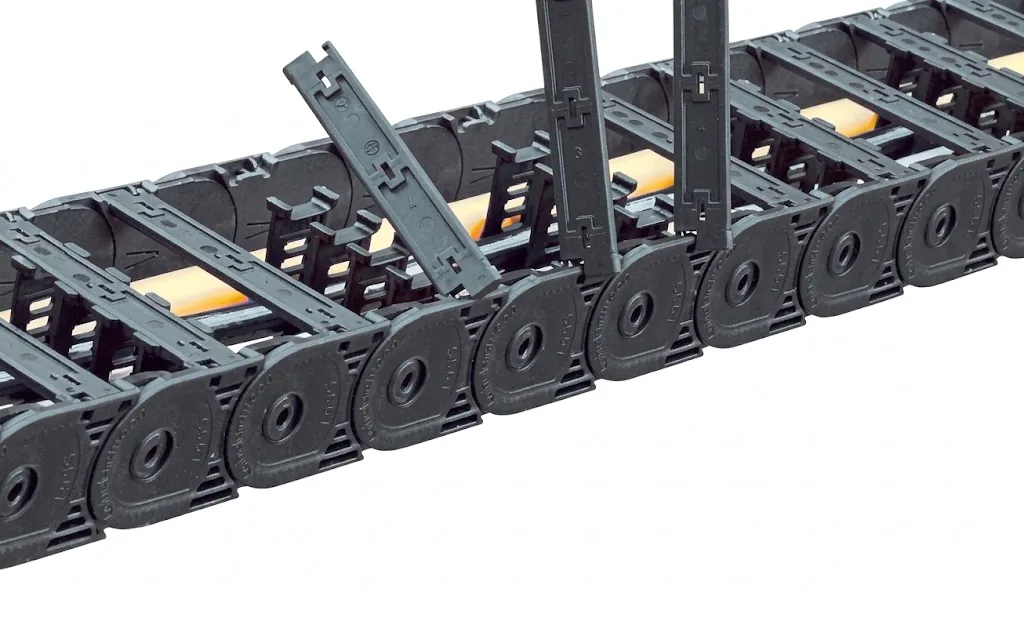
For most applications you end up with a plastic carrier. Which series fits depends mainly on the stroke, the speed and the space:
| Situation | Series | Why |
|---|---|---|
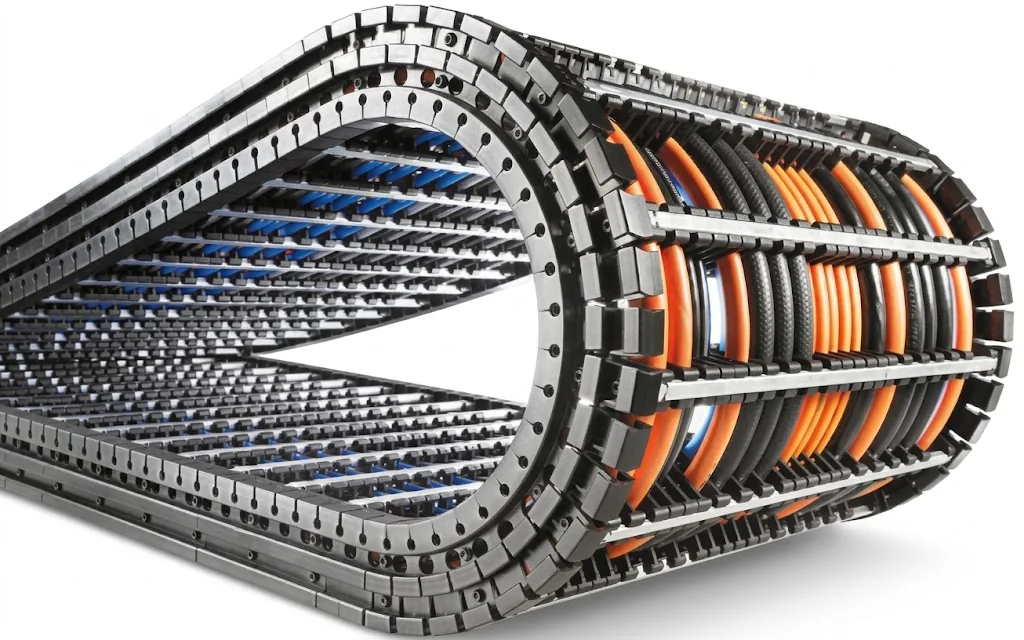
| Short, fast strokes, few vibrations | QUANTUM® | Made for high speeds and accelerations with very low vibration |
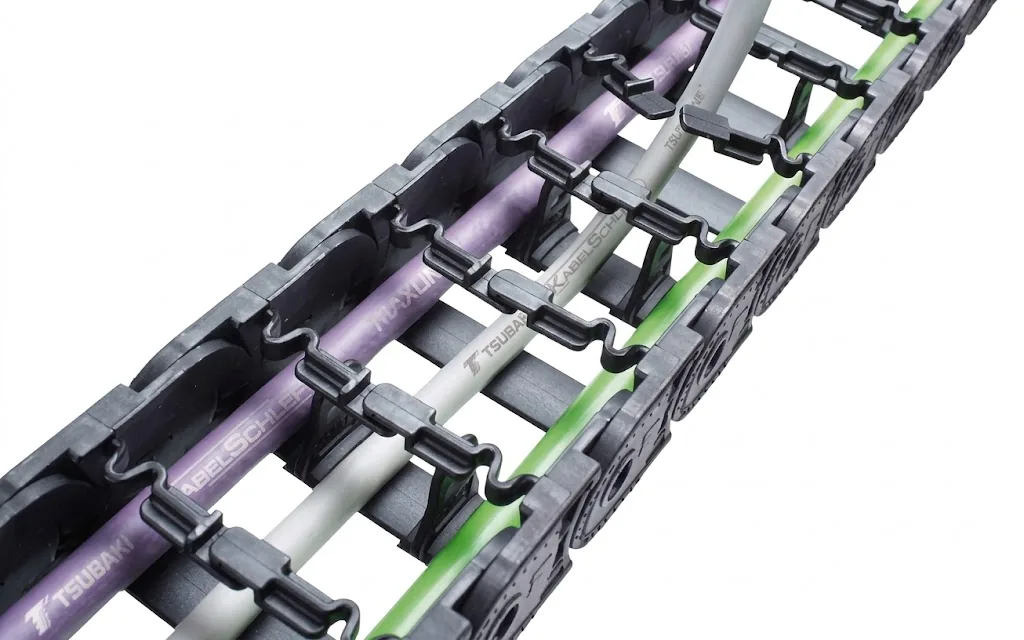
| Compact modules, thin cables | MONO | Small inner dimensions, inner widths from 6 mm |
| Frequent cable changes | EasyTrax® | Can be opened with one hand |
| Pressing cables in quickly | QuickTrax® | Cables go into elastic lamellae |
| Most axes in the line | UNIFLEX Advanced | All-rounder with a wide range of sizes |
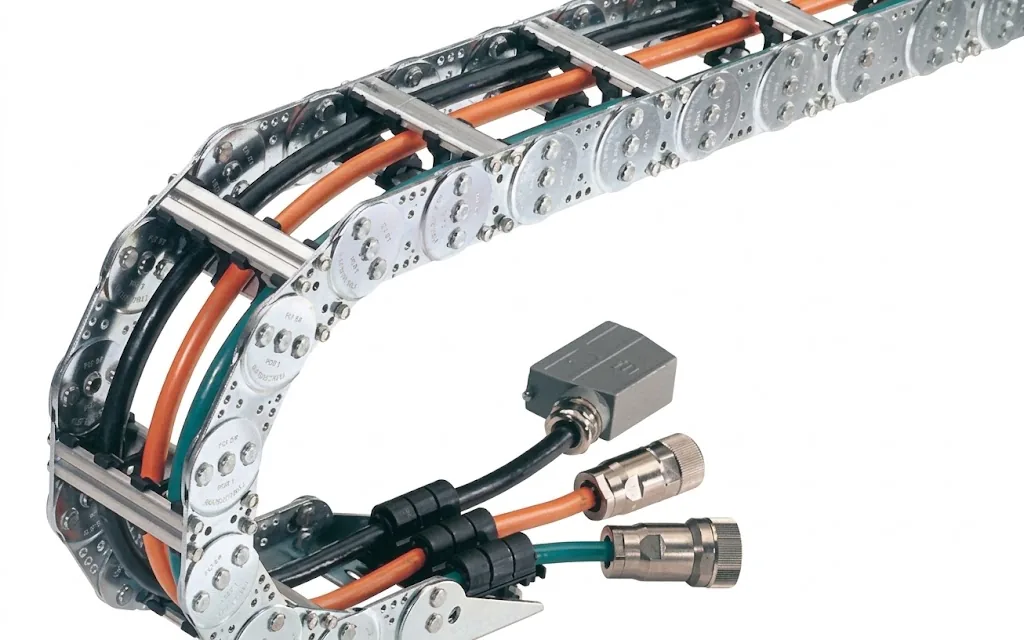
| Heavy packages, steel required | S/SX | SX is stainless steel |
Plastic does not rust. That makes it a logical choice in wet and cleaning-intensive environments. Only choose a steel carrier if the load, the self-supporting length or the environment calls for it. In that case take the SX version in stainless steel, not the galvanised S. You can read how to weigh this up in steel or plastic cable carrier.

Open or closed cable carrier with wet cleaning?
In a line that is cleaned wet, an open carrier is usually better. Water and dirt drain out again, the cleaning reaches every part and you can see the cables. In a closed carrier, water can remain behind the covers and you cannot see what is happening inside.
Only choose a closed carrier where product, crumbs or dirt fall onto the carrier from above. Position the carrier so that water can drain away after cleaning, and include opening and rinsing in the cleaning instructions. More about this choice in open or closed cable carrier.
Which guide channel suits the food industry?
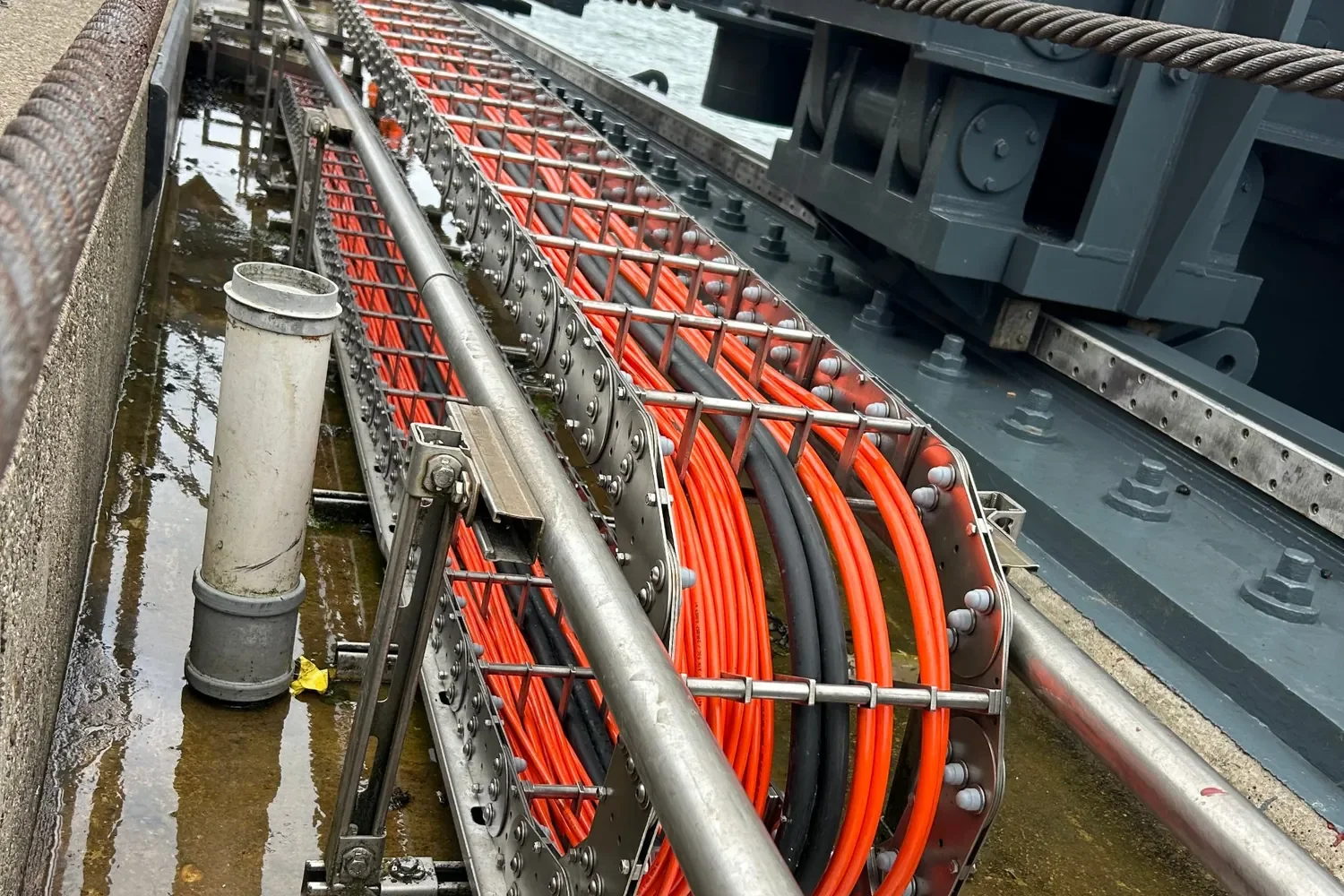
If the carrier runs gliding, it lies in a guide channel. Galvanised steel is the standard, but with moisture and in the food industry you choose stainless steel. Make sure water can drain from the channel and that you can reach into it during cleaning. A channel in which residue stays behind becomes a place where dirt builds up. You can read which channel systems exist in cable carrier guide channel.
Which cables do you use in a cable carrier that is cleaned?
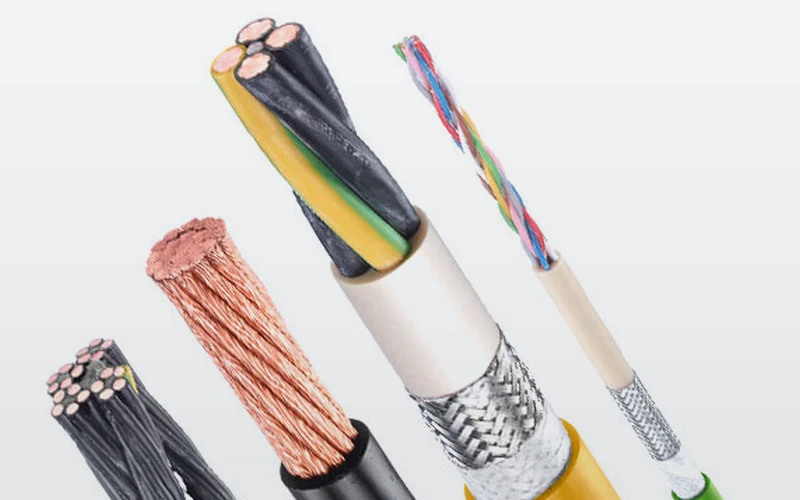
The cables in the carrier move with every stroke. So they must be made for moving applications, and the jacket must withstand the water and the agents used for cleaning. Ask in advance which cleaning agents are used in the line and choose the jacket accordingly. You can read the difference between the common jackets in PUR or PVC cable in the cable carrier.
With the Cable finder you search for a flexible cable by cores, cross-section, travel length and jacket. In packaging lines, hoses for air and vacuum to grippers often run along as well. Give them their own compartment next to the cables, so they do not slide over each other. How to arrange this is explained in dividing a cable carrier.
How do you keep the cable carrier hygienically clean?
A cable carrier in a food line belongs in the regular cleaning round. A few rules:
- (01)Clean with the machine stopped and de-energised. Never work on a carrier that can move.
- (02)Use water and an agent that suits the material. No solvents on plastic.
- (03)Do not blow residue between the links with compressed air. That only pushes dirt deeper into the carrier.
- (04)Do not lubricate the carrier. Oil and grease actually hold on to dirt.
- (05)Check straight away that everything is still in place. Inspect links, crossbars, cables and strain relief.
The full step-by-step plan is in cleaning a cable carrier. With the Carrier check you then check in a few minutes whether the carrier is still in order.
How do you route the cables hygienically into the cabinet?
The transition from the carrier to the control cabinet is often the weakest point. An ordinary cable gland has threads and edges where water and residue stay behind. In a food line you use a hygienic cable entry with a smooth surface, such as the Clean plates from Detas Ultra or the blue KT-BL grommets from icotek for cables with connectors. You can read which ones exist and how to choose in hygienic cable entry.
Calculate it yourselfCable entry plannerFrom cable list to cable entry with article numbersOpen the plannerHow to choose in four steps
- (01)Map out the line: stroke, speed, available space and how it is cleaned.
- (02)Choose the series: plastic where possible, stainless steel (SX) where steel is needed. Open, unless dirt falls on it from above.
- (03)Choose cables and hoses: suitable for movement and for the cleaning agents, with a separate compartment for hoses.
- (04)Calculate the carrier: inner dimensions, bending radius and length. You do that in the Cable carrier configurator, and the layout of the cross-section in ChainLogic.
Are you working on a machine for packaging and food? Send us the stroke, the cable list and the agents that are used. Bas and his colleagues will work it out with you free of charge and propose the carrier, cables and entry.
Frequently asked questions
Which cable carrier is suitable for the food industry?
Usually an open plastic cable carrier, such as the QUANTUM®, MONO or UNIFLEX Advanced. Plastic does not rust and an open carrier is easy to clean. If steel is needed, choose the stainless steel SX version.
Does a plastic cable carrier rust with wet cleaning?
No, plastic does not rust. Do pay attention to the cleaning agent: do not use solvents on plastic.
Is a closed cable carrier more hygienic?
Not automatically. In a closed carrier, water can remain behind the covers and you cannot see what is happening inside. Only choose a closed carrier where product or dirt falls onto the carrier from above.
Which guide channel do you use in the food industry?
A stainless steel channel. Galvanised steel is the standard, but with moisture and in the food industry you choose stainless steel.
Can you supply the cable carrier complete with cables?
Yes. We assemble the carrier in our workshop in Ruurlo with cables and hoses cut to length, laid in and secured.
Calculate it yourself
Which cable carrier fits your machine?
Enter two dimensions. The configurator opens with these values and shows the matching series right away. We check your result free of charge.
Not sure? Leave it blank and fill it in in the configurator.
Replacement
Old cable carrier broken
or worn out?
Send the type number, the size or a photo of your current carrier. Within 1 working day you'll hear which replacement fits, what it costs and when it arrives. Also if your carrier is from another brand.
Prefer to search yourself? Find a matching replacement or view all cable carriers from stock.
Next step
Calculate it yourself or browse the range. We check your result free of charge.
Series on this topic
Question about this topic?
Ask Bas directly
Cable Carriers Specialist at Wisman Techniek