Highly flexible drag chain cable
Made to bend.Millions of times.
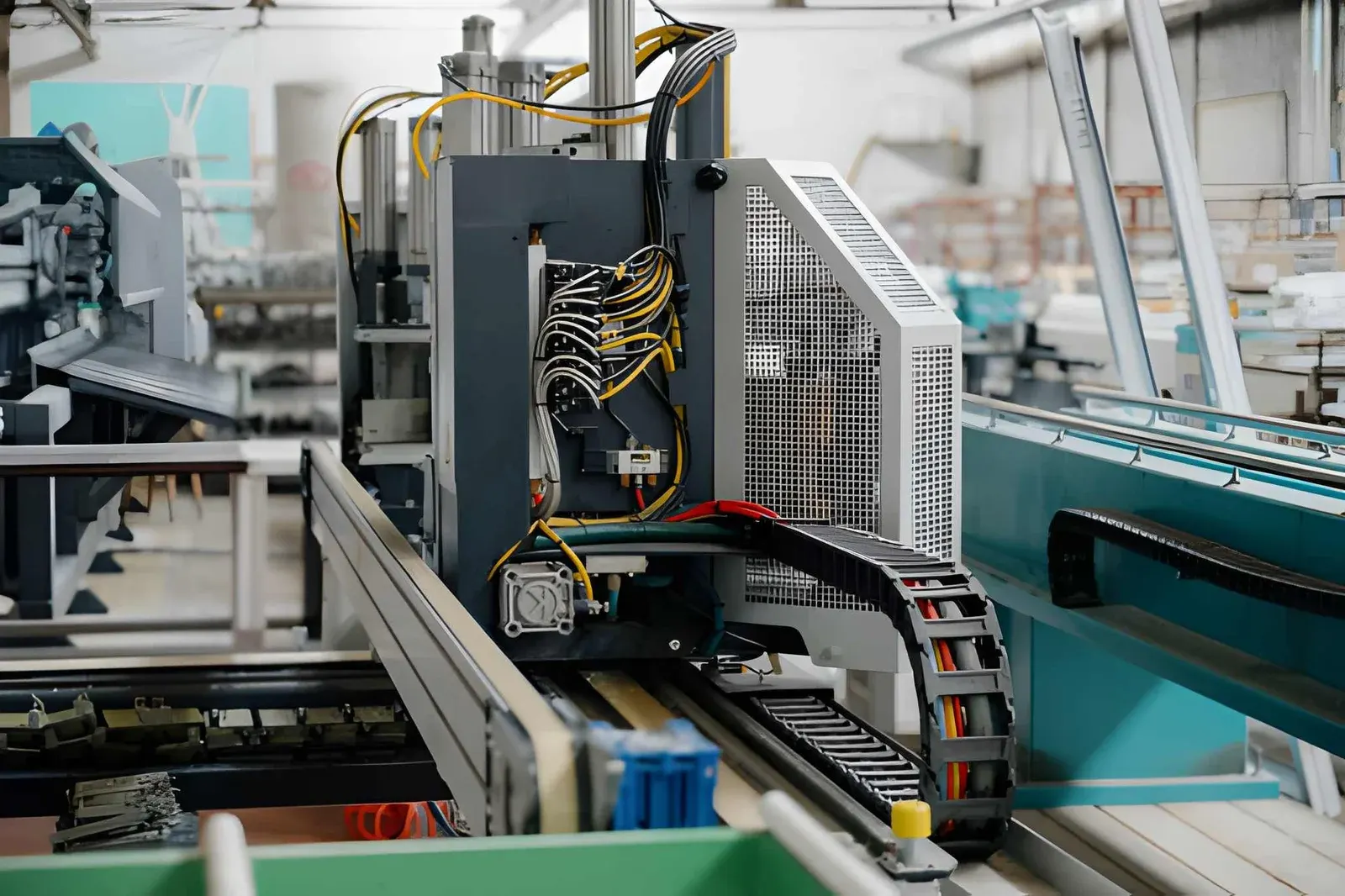
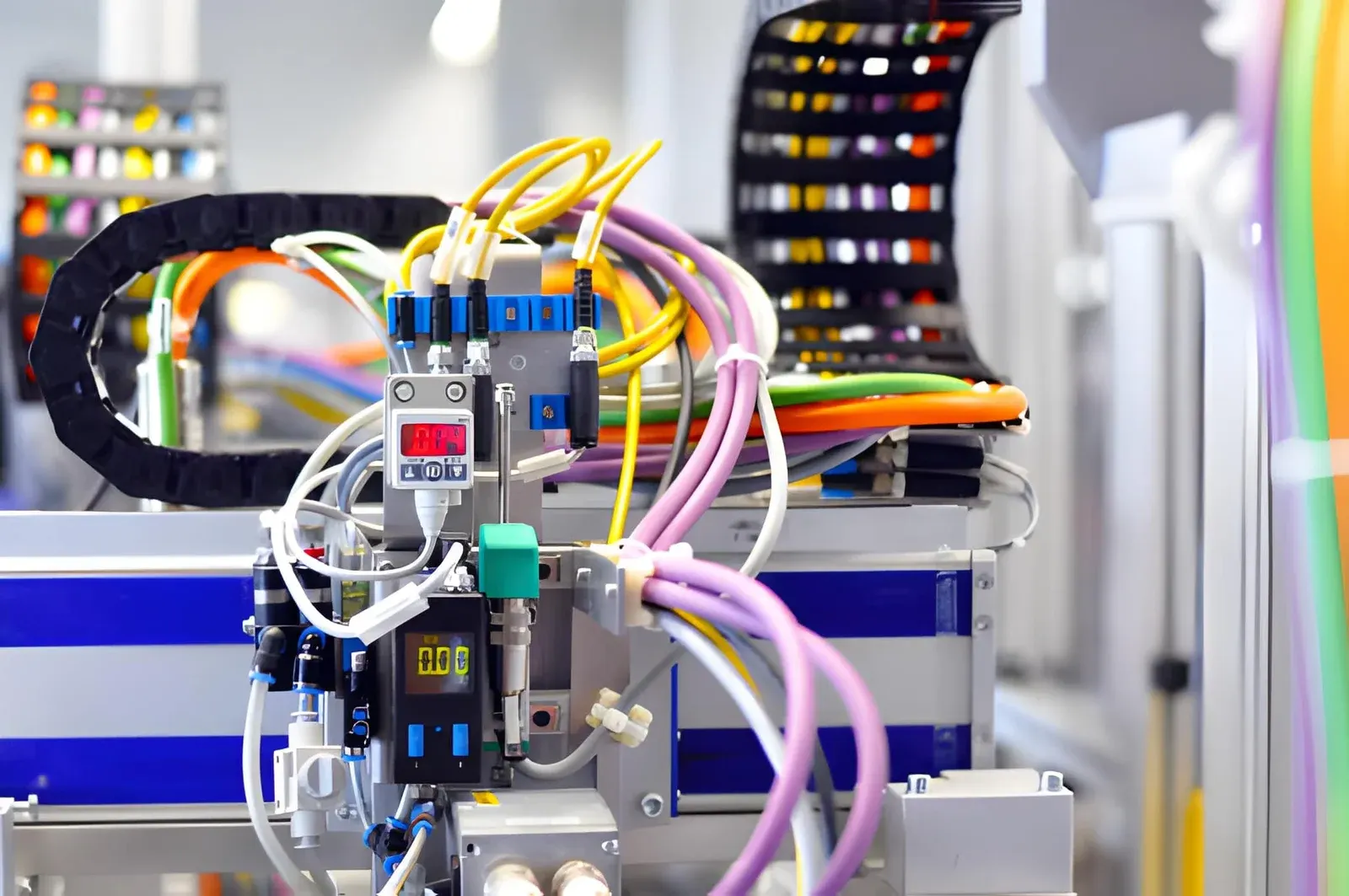
A drag chain cable moves with the machine, usually in a cable carrier. An ordinary installation cable cannot keep that up. A highly flexible cable can, if the class suits the travel distance and the number of movements.
Explanation
What makes a cable suitable for the cable carrier?
- Series on this page
- 8
- Variants
- 185
- Cycles up to
- 10 million
- Travel length up to
- 1000 m
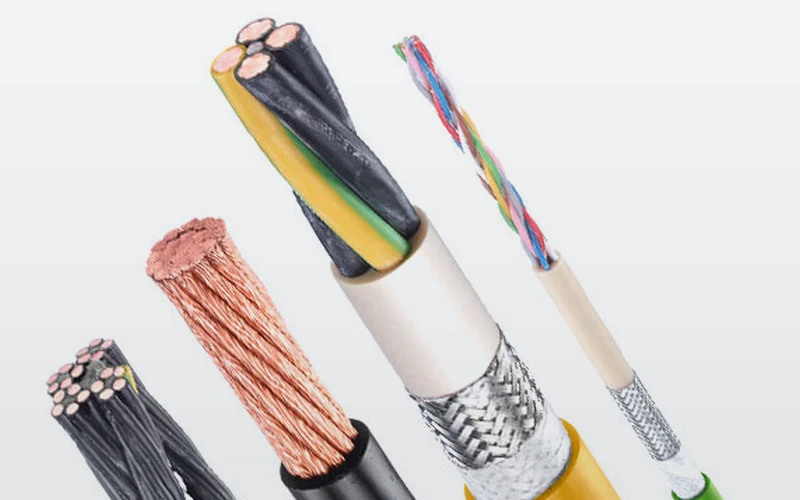
By drag chain cable we mean a cable that moves with the machine in a cable carrier. With every stroke it bends through the carrier's bend, hundreds of thousands to millions of times. That requires a different construction than a fixed cable: fine-stranded conductors, a short lay length and a wear-resistant jacket.
TRAXLINE divides the cables into classes: 200, 400, 700 and 1000. The class is in the name and says how many cycles and what travel distance the cable can handle. Class 200 is bend-flexible and intended for short strokes. From 400 upwards the control and power cables are highly flexible and bundle-stranded.
The class also fixes the jacket: PVC in 200 and 400, PUR in 700 and TPE in 1000. PVC is enough in a dry, clean environment. As soon as there is oil, coolant or heavy wear, choose PUR or TPE.
A cable that hangs freely or drags across the floor, as with a festoon system, is a different story. This page is about cables in the cable carrier. The trade-off between the two is in our article on cable carrier or festoon.
From the cable data
Control cables by class
The control cables show the four classes best: from bend-flexible PVC to highly flexible TPE. Power, data and bus cables follow the same classification.
CONTROL 200
- Type
- Control cables
- Sheath
- PVC
- Shielding
- Unshielded
- Cycles
- 2 million
- Travel length
- 25 m
- Ø
- 4,7–16,8 mm
CONTROL 200 C
- Type
- Control cables
- Sheath
- PVC
- Shielding
- Shielded
- Cycles
- 2 million
- Travel length
- 25 m
- Ø
- 6,4–19,6 mm
CONTROL 400 600V
- Type
- Control cables
- Sheath
- PVC
- Shielding
- Unshielded
- Cycles
- 4 million
- Travel length
- 100 m
- Ø
- 5,8–21 mm
CONTROL 400 C 600V
- Type
- Control cables
- Sheath
- PVC
- Shielding
- Shielded
- Cycles
- 4 million
- Travel length
- 100 m
- Ø
- 8,3–26,7 mm
CONTROL 700 600V
- Type
- Control cables
- Sheath
- PUR
- Shielding
- Unshielded
- Cycles
- 7 million
- Travel length
- 500 m
- Ø
- 5,8–21,8 mm
CONTROL 700 C 600V
- Type
- Control cables
- Sheath
- PUR
- Shielding
- Shielded
- Cycles
- 7 million
- Travel length
- 500 m
- Ø
- 7,9–29,9 mm
CONTROL 1000 TPE 300/500V
- Type
- Control cables
- Sheath
- TPE
- Shielding
- Unshielded
- Cycles
- 10 million
- Travel length
- 1000 m
- Ø
- 9,6–20,2 mm
CONTROL 1000 C TPE 300/500V
- Type
- Control cables
- Sheath
- TPE
- Shielding
- Shielded
- Cycles
- 10 million
- Travel length
- 1000 m
- Ø
- 12,5–30 mm
Classes
What each class can handle
Across all TRAXLINE series, from the cable data. The travel distance differs per cable type; check the series for the exact limit.
200
- Sheath
- PVC
- Flexibility
- Flexible in bending
- Cycles up to
- 2 million
- Travel length up to
- 25 m
- Series
- 2
- Variants
- 57
400
- Sheath
- PVC
- Flexibility
- Highly flexible
- Cycles up to
- 4 million
- Travel length up to
- 50–100 m
- Series
- 5
- Variants
- 109
700
- Sheath
- PUR
- Flexibility
- Highly flexible
- Cycles up to
- 7 million
- Travel length up to
- 5–500 m
- Series
- 27
- Variants
- 247
1000
- Sheath
- TPE
- Flexibility
- Highly flexible
- Cycles up to
- 10 million
- Travel length up to
- 400–1000 m
- Series
- 7
- Variants
- 108
Choose
How to choose the class
01Count the movements
Strokes per hour × operating hours per year × years gives the number of cycles. Choose a class that is safely above that.
02Measure the travel
For control and power cables the travel distance ranges from 25 m in class 200 to 1000 m in class 1000.
03Look at the environment
Oil, coolant, chips or heavy wear: choose PUR or TPE.
04Choose the shielding
Signals and controlled motors: shielded (C). Simple control current: unshielded is enough.
05Check the diameter
Inner height of the carrier at least Ø × 1.1, radius at least 7.5 × the Ø of the thickest cable.
06Lay straight
Without torsion, not crossed, with strain relief at both ends.
Next steps
Useful with this cable
Read on
Practical articles from our specialists: choosing, calculating, installing and maintaining. No sales talk.

Written by
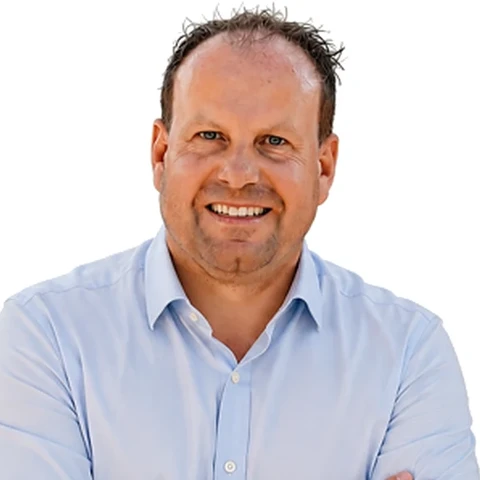
Bas Egberink
- Basic · 9 minCable carrier cable: which cables go in a cable carrier? How to choose the right one
- Basic · 11 minFlexible cable: when is a cable truly flexible?
- Choose & calculate · 10 minPUR or PVC cable in the cable carrier: which jacket?
- Choose & calculate · 13 minCalculating the bending radius for cable and cable carrier (with table)
Frequently asked questions
Questions about drag chain cable
Cables by application
Other applications

Contact
Cables and carrier
right first time.
Send your cable list or machine. We choose the cables and the carrier, and supply them fully assembled if desired.
- Phone+31 88 002 3500
- E-mailverkoop@wisman-techniek.nl
- AvailableMon–Fri 08:30–17:00



11 specialists in Ruurlo
You speak directly to someone who knows.